
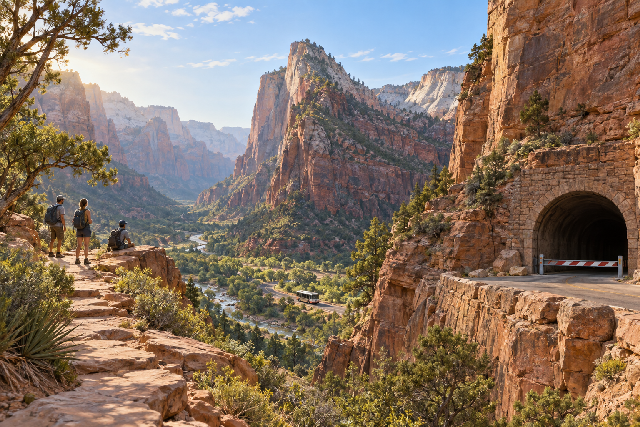
Travel plans at Zion National Park can change with little warning. A temporary search-and-rescue closure recently affected Angels Landing, and an overnight closure of the Zion–Mount Carmel Tunnel may disrupt drivers using the park’s east entrance. Even after a trail reopens, another emergency, storm, rockfall, or transportation change can alter the day’s schedule.
This does not mean you should cancel a Zion trip. It means you should confirm conditions, understand which parts of your itinerary depend on a single road or trail, and prepare at least one backup plan. A few checks before leaving can prevent a closure from turning into a missed hotel reservation, an expensive detour, or an unsafe hike.
What Has Changed at Zion National Park?
Recent news has centered on two separate access issues. Angels Landing temporarily closed during a search-and-rescue operation and later reopened. Separately, an overnight closure involving the Zion–Mount Carmel Tunnel was announced. The tunnel is part of Utah State Route 9 and connects Zion Canyon with the park’s east entrance.
These events affect travelers differently. A trail closure changes a hiking itinerary. A tunnel closure can affect driving times, arrival plans, lodging choices, and connections to destinations east of Zion, including Bryce Canyon National Park, Kanab, and Lake Powell.
Conditions may have changed since the closure announcements were published. Visitors should treat news reports as an early warning, not as the final word on access. The National Park Service’s current-conditions page and official alerts should be the last checks before departure.
How the Tunnel Closure Could Affect Your Drive
The Zion–Mount Carmel Tunnel is on the park’s scenic east-west route. Travelers entering from the east commonly use it to reach Zion Canyon, Springdale, and the south entrance. Visitors leaving Zion for Bryce Canyon or other destinations to the east may depend on the same road.
An overnight closure can create several practical problems:
- You may be unable to cross the park at your planned hour.
- Your navigation app may suggest a long detour outside the park.
- A late arrival could conflict with hotel check-in or campground rules.
- You may need more fuel, food, or driving time than expected.
- Oversize vehicles may face separate tunnel restrictions even when the road is open.
If your schedule requires crossing the tunnel, identify the closure hours before committing to a departure time. Add a buffer for entrance traffic, construction controls, wildlife, and slow-moving vehicles. Do not plan to reach the tunnel only a few minutes before a scheduled closure.
Travelers arriving late from Bryce Canyon, Kanab, or Page should ask their lodging provider whether after-hours check-in is available. Those staying in Springdale may find the south entrance more dependable during an east-side overnight closure. Visitors lodging east of the park should consider whether their first morning activity requires crossing the tunnel.
A Simple Decision Guide for Drivers
| Your situation | Main concern | Practical response |
|---|---|---|
| Arriving from Las Vegas or St. George | South entrance congestion | Allow extra time, park once when possible, and use the shuttle if it is operating. |
| Arriving from Bryce Canyon or Kanab | East entrance and tunnel access | Check tunnel hours before departure and save an alternate route. |
| Staying east of Zion | Reaching an early Zion Canyon activity | Leave a generous buffer or reconsider lodging if the closure overlaps your travel window. |
| Driving an RV or other large vehicle | Size restrictions and tunnel traffic control | Review official dimensions, fees, operating hours, and alternate routes in advance. |
| Changing hotels on the same day | Late check-in caused by a detour | Contact the next property and avoid a tightly timed evening crossing. |
Angels Landing Is Open, but Access Is Not Guaranteed
Angels Landing reopened after the recent search-and-rescue operation, according to local reporting. That reopening should not be interpreted as a promise that the trail will remain available throughout your visit. Rescue activity, dangerous weather, ice, rockfall, or other hazards can trigger another temporary closure.
A permit is required for the chain-assisted section of Angels Landing. A park entrance pass, shuttle ride, or lodging reservation does not replace that permit. Travelers should verify the permit holder’s name, date, start time or time window, and group details. Bring the required identification and a saved copy of the permit in case mobile service is weak.
Having a permit also does not mean you must continue in unsafe conditions. High winds, wet rock, lightning, ice, heat, and crowding can change the risk. Turn around if conditions exceed your comfort or ability. The goal is to enjoy the park, not to complete one trail at any cost.
Choose a Backup Hike Before You Arrive
An alternative should match the group’s fitness, available time, and tolerance for exposure. Do not wait until a trail closes to begin researching options.
- Scout Lookout: This uses part of the Angels Landing route but stops before the permit-only chain section. Access can still be affected by closures on the West Rim Trail.
- Canyon Overlook Trail: A shorter scenic option near the east side of the tunnel. Parking is limited, so it is not a guaranteed substitute.
- Pa’rus Trail: A lower-stress choice near Zion Canyon with broad views and easier logistics.
- Watchman Trail: A moderate hike near the visitor center that does not require an Angels Landing permit.
- Emerald Pools area: A flexible option when connecting trails are open, although current bridge and trail conditions must be checked.
Trail availability changes. Confirm the status of the entire route, not just the destination name. A connecting bridge or trail segment may be closed even when part of an area remains accessible.
Plan Around the Zion Canyon Shuttle
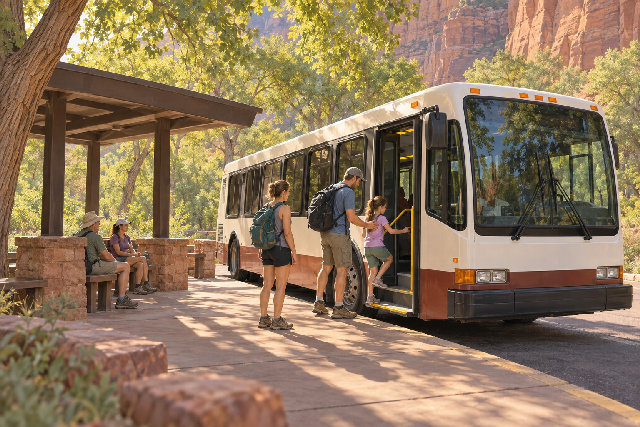
When the park shuttle is operating, private vehicles are generally restricted on Zion Canyon Scenic Drive, with limited exceptions. This affects how early you must leave, where you park, and how long it takes to reach a trailhead.
Check the current shuttle season, first and last departure times, and stop information. The final shuttle from an uphill stop is especially important. Missing it can leave you with a long walk after an already demanding hike.
Parking near the visitor center can fill early on busy days. Staying in Springdale may allow you to use local transportation or walk to the pedestrian entrance, reducing the need to search for parking. If you stay farther away, include driving, parking, entrance lines, and shuttle waits in your morning plan.
How Closures Can Change Trip Costs
A closure does not always produce a direct fee, but it can create extra expenses. A longer route consumes more fuel. An unplanned night near the park may cost more than a room booked early. Missing a hotel cancellation deadline can mean paying for a room you cannot reach. Visitors may also spend more on meals if a detour delays their arrival.
Before the trip, review cancellation terms for lodging, tours, and rental cars. Flexible reservations can be worth a slightly higher price when an itinerary relies on mountain roads, permits, or weather-sensitive activities. Keep the car fueled, download maps for offline use, and carry water and snacks so a delay does not become an emergency purchase.
Safety Checks to Make Before Each Park Day
Zion’s weather and terrain deserve the same attention as road closures. Flash floods can threaten narrow canyons even when rain falls somewhere else in the watershed. Summer heat can make an exposed hike dangerous, while cold-season ice may turn steep paths into hazardous surfaces.
Each morning, review:
- National Park Service alerts and current conditions
- The National Weather Service forecast and flood risk
- Trail, bridge, road, and tunnel closures
- Shuttle hours and the last return trip
- Your water supply, footwear, layers, and turnaround time
- Whether everyone in the group can safely complete the planned route
Tell someone outside your group where you are going and when you expect to return. Mobile coverage is unreliable in parts of the park, so screenshots and offline maps are more useful than links that require a signal.
A Practical Pre-Trip Checklist
- One week before: Review permits, lodging policies, road projects, vehicle restrictions, and seasonal shuttle information.
- Two days before: Check the forecast and identify two alternative hikes or activities.
- The night before: Review official alerts, tunnel hours, trail status, and your driving route.
- The morning of the visit: Check conditions again, fill water containers, and confirm the final shuttle time.
- At the park: Follow posted signs and ranger instructions, even if an older online report says an area is open.
Frequently Asked Questions
Is Angels Landing currently open?
It reopened after the reported search-and-rescue closure, but trail status can change at any time. Check official Zion alerts on the day of your hike. A permit is still required for the chain section.
Does a tunnel closure shut down all of Zion National Park?
No. A closure of the Zion–Mount Carmel Tunnel affects the east-west route through the park, not every entrance, road, trail, or visitor facility. However, it can significantly disrupt travelers moving between Zion Canyon and the east entrance.
Should I change my hotel because of the closure?
Possibly, if your lodging requires a tunnel crossing during closure hours or your itinerary includes early activities on the opposite side. First confirm the dates and times, then compare the detour with the property’s cancellation policy.
Can I drive to the Angels Landing trailhead?
During shuttle operations, most visitors reach The Grotto trailhead using the Zion Canyon shuttle. Private-vehicle access on the scenic drive is restricted during those periods, subject to park rules and limited exceptions.
Where should I check for last-minute changes?
Use the National Park Service’s Zion alerts and current-conditions pages as your primary sources. Check official weather information as well. At the park, posted notices and ranger directions take priority over saved itineraries and older news reports.
Plan for Zion, Not Just One Trail
The best Zion itinerary is flexible. Confirm the Zion–Mount Carmel Tunnel schedule if your route uses the east entrance, and do not assume a recently reopened trail will remain available. Verify Angels Landing permit details, shuttle hours, weather, and active alerts before leaving your lodging.
Most importantly, build a day that still works if your first choice closes. Zion offers scenic drives, overlooks, riverside areas, and trails for many ability levels. A backup plan protects your time and money while making it easier to respond safely when conditions change.
References
- National Park Service: Zion Current Conditions — Supports checks for active road, trail, weather, and facility alerts.
- National Park Service: Angels Landing Hiking Permits — Explains permit requirements for the chain-assisted portion of the route.
- National Park Service: Zion Canyon Shuttle System — Supports planning for seasonal shuttle operations, stops, and access rules.
- National Park Service: Zion–Mount Carmel Highway — Provides official information about the highway, tunnel, and vehicle considerations.
- National Weather Service: Salt Lake City Forecast Office — Supports weather and hazardous-condition checks for southern Utah travel.