
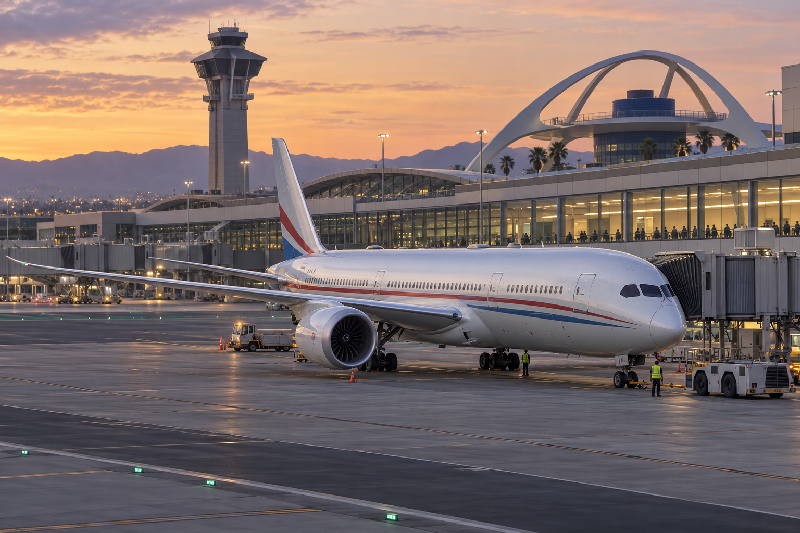
An American Airlines Boeing 787-9 flying from New York to Tokyo made an unusually long diversion to Los Angeles on September 23, 2026, after encountering a reported technical problem several hours into the trip.
American Airlines Flight 167 had already crossed much of Canada and was approaching Alaska when it turned back toward the continental United States. Instead of landing at a nearby airport in Alaska, Seattle, or Vancouver, the aircraft continued south to Los Angeles International Airport, leaving passengers with a roughly 10-hour flight that did not reach Japan.
For travelers, the important part of a diversion like this is not simply why an airplane changed course. A long-haul diversion can affect hotel reservations, connecting flights, airport transportation, checked baggage, meals, and the first day or even two days of an international trip.
What Happened to American Airlines Flight 167?
Flight-tracking information identifies the affected flight as American Airlines AA167, normally operating nonstop from New York John F. Kennedy International Airport to Tokyo Haneda Airport.
Reports indicate that the Boeing 787-9, registration N824AN, departed JFK on September 23 and followed a typical northern routing across Canada. Several hours into the flight, the aircraft reversed course after a reported technical malfunction.
Rather than returning to New York, the aircraft was directed toward Los Angeles, one of American Airlines’ major international operating points. The Dreamliner landed safely at LAX after spending more than 10 hours in the air.
| Flight detail | Reported information |
|---|---|
| Airline | American Airlines |
| Flight | AA167 |
| Aircraft | Boeing 787-9 Dreamliner |
| Registration | N824AN |
| Original route | New York JFK to Tokyo Haneda |
| Date | September 23, 2026 |
| Diversion airport | Los Angeles International Airport |
| Reported cause | Technical issue |
| Approximate time airborne | More than 10 hours |
Public reporting available shortly after the incident did not provide a detailed description of the specific component or system involved. Travelers should therefore be cautious about social-media claims that assign a more precise cause unless American Airlines, the FAA, or another official source confirms it.
Was an Emergency Declared?
Reports describing the incident focus on a technical problem and the decision to divert, but there was no widely reported indication at the time of publication that the flight made the type of emergency landing associated with an immediate threat to passengers.
The aircraft landed safely at LAX.
That distinction matters. A diversion can happen for many reasons, ranging from medical problems and weather to mechanical indications that pilots and airline operations decide should be inspected before crossing a large stretch of ocean.
Choosing to divert does not necessarily mean an aircraft was close to an accident. Airlines may make conservative decisions precisely to avoid continuing into a more difficult situation.
Why Would the Flight Go All the Way to Los Angeles?
At first glance, Los Angeles may seem like a strange choice for a flight that encountered trouble near Alaska. There were geographically closer airports.
But distance is only one factor in choosing a diversion airport.
A major airline may prefer an airport where it has maintenance support, international gate capacity, replacement aircraft, crew resources, passenger-service staff, and frequent onward flights.
LAX is particularly useful for a Tokyo-bound aircraft because American operates nonstop service between Los Angeles and Tokyo. That can make passenger recovery easier than diverting hundreds of people to an airport with limited alternative flights to Japan.
What Happened to the Passengers?
Initial reporting indicated that passengers were expected to continue from Los Angeles to Tokyo on September 24.
Flight history also shows that the diverted aircraft, N824AN, subsequently returned to scheduled passenger operations. Tracking data showed it operating a Los Angeles-to-Tokyo flight on September 24, indicating that the aircraft did not remain indefinitely out of service following the diversion.
Individual passenger arrangements can still vary. Some travelers may be moved to a replacement flight, while others may be rerouted depending on available seats, ticket connections, or final destinations beyond Tokyo.
What a Diversion Like This Can Cost Travelers
The airline may cover some expenses, but a long diversion can still create secondary costs that are easy to overlook.
Suppose a traveler planned to arrive at Haneda in the afternoon, take a train into Tokyo, and check into a prepaid hotel that evening. A one-day delay could affect all three arrangements.
- A separately booked domestic Japan flight could be missed.
- A nonrefundable hotel night could be lost.
- A prepaid airport transfer might need to be canceled.
- A rail reservation may need to be changed.
- A tour booked for the first morning could become unusable.
Airlines generally focus on transporting passengers to the destination shown on the airline ticket. They do not automatically cover every separately booked expense caused by a disrupted trip.
This is one reason international travelers should avoid tightly scheduling expensive, nonrefundable activities immediately after arrival.
American Airlines’ Hotel and Meal Policy for Diversions
American Airlines’ published customer service plan contains specific provisions for diversions.
The airline states that when a flight is diverted to another city and passengers are not boarded for their final destination before 11:59 p.m., it will provide an approved hotel when rooms are available, transportation between the airport and hotel, and meal vouchers when passengers remain in the diversion city for more than three hours.
The airline also says it may reimburse reasonable hotel or transportation costs when it cannot provide the applicable voucher.
However, travelers should speak with airline staff before independently booking an expensive hotel. American’s conditions of carriage warn that reimbursement may depend on the circumstances and authorization.
What About Checked Bags?
Baggage can become one of the most confusing parts of an international diversion.
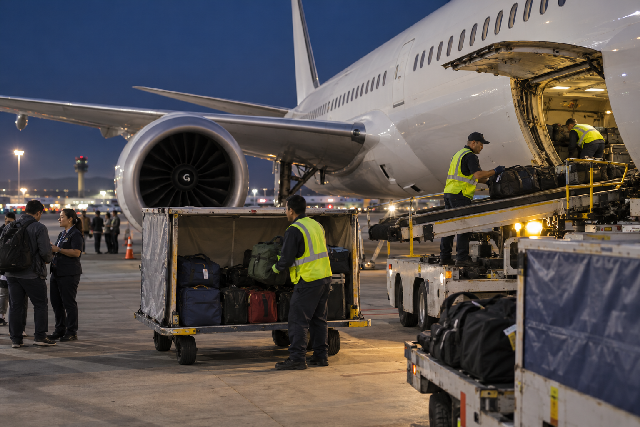
If passengers are placed on a continuation flight, checked bags may remain under the airline’s control and be transferred automatically. In other situations, passengers may be instructed to collect luggage before leaving the airport.
Do not assume your bag will appear at baggage claim simply because the aircraft has landed.
Before leaving the terminal, ask:
- Is my checked bag staying with the airline?
- Will it automatically transfer to the replacement Tokyo flight?
- Do I need to collect it at LAX?
- What should I do if medication or essential items are inside?
For future trips, keep medication, chargers, travel documents, one change of clothing, and basic toiletries in your carry-on rather than your checked suitcase.
What If You Miss a Connection in Japan?
The answer depends heavily on whether the connection is on the same ticket.
If your itinerary is JFK-Tokyo-Osaka and all flights were issued together, the operating airline generally has a much clearer responsibility for getting you to the ticketed final destination.
If you separately bought a low-cost Tokyo-to-Osaka ticket, that second airline may treat you as a no-show when you miss the flight.
When an international diversion occurs, contact separately booked airlines, hotels, and transportation providers as soon as your revised arrival time becomes clear.
Some companies will waive change fees when customers provide proof of major airline disruption, even when they are not legally required to do so.
What Travelers Should Do During a Long-Haul Diversion
A diversion becomes easier to manage if you handle the most time-sensitive problems first.
- Save screenshots of the original itinerary. Flight details can change in the airline app after rebooking.
- Check the airline app before standing in a long service line. You may already have a replacement flight.
- Ask whether hotel and meal vouchers are available. Do this before paying out of pocket when possible.
- Confirm your baggage status. Do not leave the airport without knowing where your checked suitcase is going.
- Contact hotels and connecting transportation. Tell them your flight was diverted and provide the new arrival estimate.
- Keep every receipt. Save hotel, meal, rideshare, train, and other disruption-related receipts.
- Check travel-insurance benefits. Some policies and credit cards provide trip-delay reimbursement after a qualifying delay.
Can Passengers Get a Refund?
U.S. Department of Transportation rules provide refund rights when an airline cancels a flight or makes a significant change and the traveler decides not to accept the alternative transportation offered.
That does not mean a passenger can automatically receive both a full refund and complete the replacement trip.
If the airline rebooks you and you use the replacement transportation to Tokyo, your situation is different from that of a passenger who declines the replacement itinerary and ends the trip.
The DOT also lists American Airlines as committing to meals, hotels, and hotel transportation for qualifying controllable delays and cancellations. The exact benefits depend on the cause and circumstances of the disruption.
Should Travelers Be Concerned About Flying on a Boeing 787-9?
One diversion by itself does not establish a broader problem with an aircraft model.
Modern long-haul airplanes have multiple monitoring and backup systems. A technical indication that is manageable in flight may still cause pilots and airline operations specialists to change course because crossing remote oceanic areas leaves fewer practical diversion options later.
For travelers, the more useful lesson is operational rather than aircraft-specific: extremely long international flights can occasionally experience disruptions that produce much larger schedule consequences than a typical short domestic delay.
This Was Not an Older LAX Dreamliner Diversion
Travelers searching for information about the incident may encounter stories involving other Boeing 787 diversions to Los Angeles or other airports.
The event discussed here was American Airlines Flight AA167 from New York JFK to Tokyo Haneda on September 23, 2026, operated by Boeing 787-9 N824AN.
Checking the flight number, date, registration, and route is important because older Dreamliner incidents can appear prominently in search results and may involve entirely different mechanical issues.
How to Protect a Japan Trip From This Kind of Disruption
You cannot prevent a diversion, but you can build a trip that is easier to repair afterward.
For a long-distance journey to Japan, consider leaving your arrival evening relatively flexible. Avoid booking an expensive nonrefundable tour a few hours after landing. If you need a separate domestic flight or train connection, allow substantial time between the international arrival and onward departure.
It is also useful to book important connecting travel on the same ticket whenever practical.
Finally, keep your airline app updated and make sure your phone number and email address are included in your reservation. American says it uses these channels to distribute delay, cancellation, and diversion updates.
Frequently Asked Questions
Where was American Airlines Flight 167 going?
The flight was traveling from New York John F. Kennedy International Airport to Tokyo Haneda Airport.
Where did the Boeing 787-9 divert?
It diverted to Los Angeles International Airport on September 23, 2026.
Why did AA167 turn around?
Initial reporting cited a technical problem. A more detailed official explanation of the specific system involved was not publicly available in the initial reports.
Did the aircraft land safely?
Yes. The Boeing 787-9 landed safely at LAX after more than 10 hours in the air.
Did passengers continue to Tokyo?
Initial reports indicated that passengers were expected to continue their journey from Los Angeles to Tokyo the following day.
Did the Boeing 787-9 return to service?
Flight-tracking records show aircraft N824AN operating from Los Angeles toward Tokyo on September 24, indicating that it returned to passenger operations after the diversion and maintenance attention.
Will American Airlines pay for a hotel after a diversion?
American’s customer service plan says that when a diverted flight does not board for the final destination before 11:59 p.m., eligible passengers can receive hotel accommodation, transportation, and qualifying meal assistance under its diversion policy. Travelers should confirm arrangements directly with the airline before paying substantial expenses themselves.
Bottom Line
The September 23 diversion of American Airlines Flight 167 illustrates how a single technical problem can turn a nonstop trip to Japan into a complicated two-day journey.
The Boeing 787-9 left New York for Tokyo, reversed course after several hours, and ultimately landed in Los Angeles after more than 10 hours in the air. The aircraft landed safely, passengers were expected to continue to Japan, and subsequent tracking data indicated that the aircraft returned to service.
For travelers, the practical takeaway is to prepare for the ripple effects of long-haul disruptions. Keep essential items in your carry-on, avoid fragile same-day connections, understand your airline’s hotel and meal policies, save receipts, and contact separately booked travel providers quickly when your arrival changes.
References
- AIRLIVE — American Airlines Flight 167 diversion report — Supports the reported September 23, 2026 routing, technical issue, diversion to Los Angeles, approximate time in the air, and planned passenger continuation to Tokyo.
- Flightradar24 — AA167 flight history — Supports identification of the affected JFK-to-Haneda service and the September 23 diversion to LAX.
- Plane Finder — N824AN aircraft history — Supports identification of the Boeing 787-9 registration and subsequent operating activity following the diversion.
- American Airlines Customer Service Plan — Supports information about diversion notifications, rebooking, hotels, transportation, meals, and refund procedures.
- U.S. Department of Transportation Airline Cancellation and Delay Dashboard — Supports passenger-rights information and American Airlines’ published commitments for qualifying controllable disruptions.