
A connecting flight can look easy when you book it and feel very different after landing. A 55-minute layover may be plenty of time at an airport with a simple layout and fast airside transportation. At another hub, the same connection can mean a long walk, a terminal change, or an anxious sprint to the gate.
For this ranking, we focused on the parts of an airport experience that matter most during a layover: how easy the layout is to understand, how quickly travelers can move between concourses, whether common transfers can remain behind security, recent delay exposure, airline hub structure, and the availability of useful services along the way. Current airport configurations and U.S. Department of Transportation data available in September 2026 were considered.
This is not an official government ranking. Conditions also vary by airline, gate assignment, weather, construction, and whether an international arrival requires immigration and customs processing. Still, these five airports offer some particularly practical advantages when you have to change planes.
| Rank | Airport | Best For | Main Connection Advantage |
|---|---|---|---|
| 1 | Detroit Metropolitan Airport (DTW) | Delta connections, families, shorter layovers | Simple hub layout plus the ExpressTram |
| 2 | Minneapolis-Saint Paul International Airport (MSP) | Domestic Delta connections | Well-organized Terminal 1 and strong passenger amenities |
| 3 | Salt Lake City International Airport (SLC) | Western U.S. connections | Modern, logical terminal design |
| 4 | Hartsfield-Jackson Atlanta International Airport (ATL) | High-frequency domestic and international itineraries | Extremely efficient Plane Train system |
| 5 | Denver International Airport (DEN) | Western and transcontinental connections | Simple three-concourse structure connected by train |
#1 Detroit Metropolitan Airport (DTW)
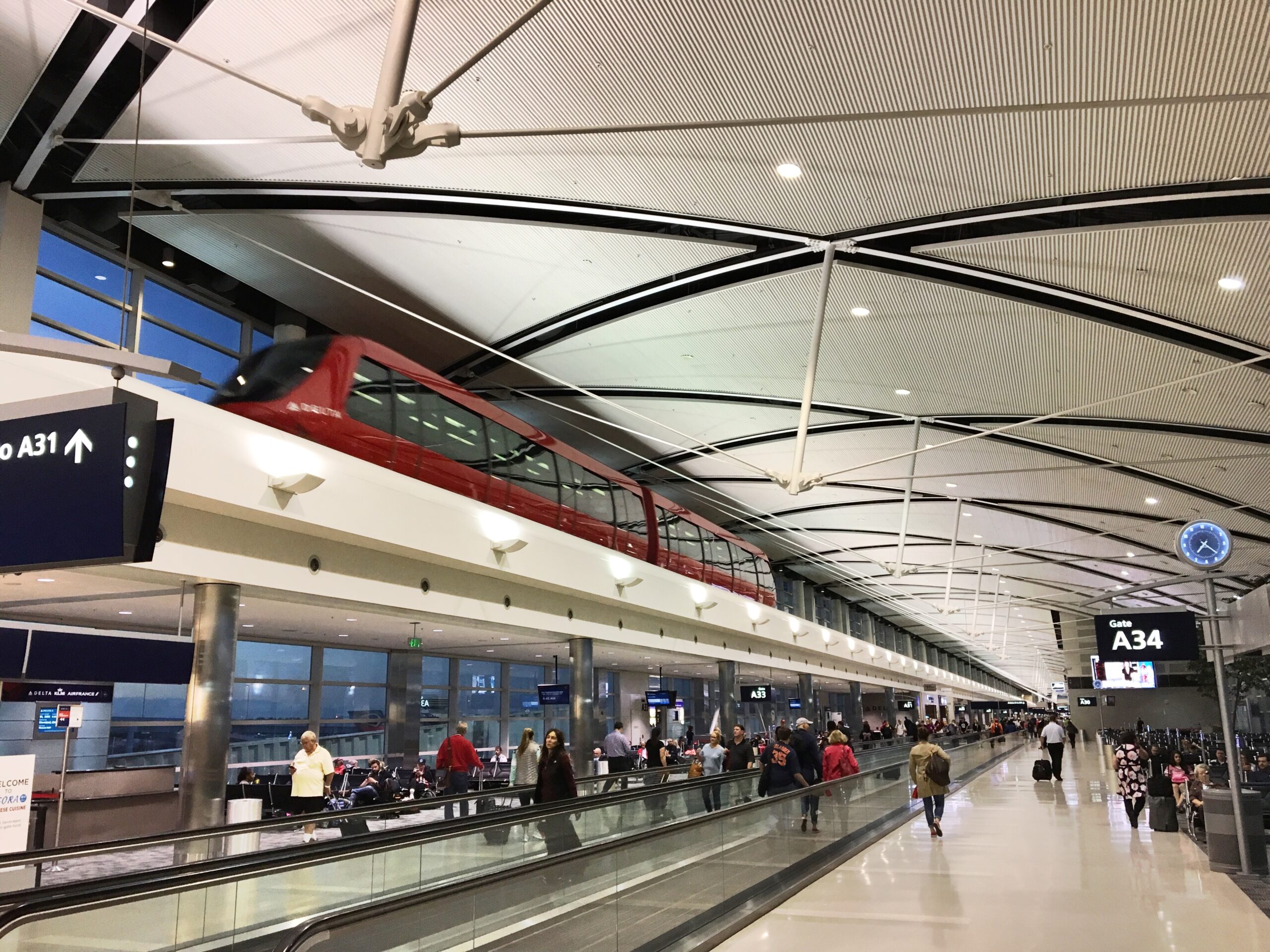
Detroit Metropolitan Airport earns the top spot because its main connecting complex combines a straightforward design with an unusually useful airport train. This is especially helpful for Delta passengers, since Delta accounts for a large share of DTW traffic and operates many connecting flights through the McNamara Terminal.
The McNamara Terminal’s Concourse A is approximately a mile long, which sounds intimidating until you consider the ExpressTram. The train runs along the concourse and stops at three stations: one near each end and one in the center. That makes a connection from a low-numbered A gate to a high-numbered A gate much easier than walking the entire distance.
Concourses B and C are connected to the same terminal complex, so most passengers staying within McNamara can make their connection without leaving the secure area. Moving between the McNamara and Evans terminals is less convenient because passengers need the terminal shuttle and must clear security again. That is an important detail when booking separate airlines.
DTW is therefore particularly attractive when both flights are operated by Delta or one of its connecting partners. Families, travelers carrying bags, and passengers with limited mobility may also appreciate avoiding exceptionally long walks along Concourse A.
Booking tip: A short DTW connection is much more appealing when both boarding passes show McNamara Terminal. If your itinerary requires changing terminals, build in considerably more time.
#2 Minneapolis-Saint Paul International Airport (MSP)
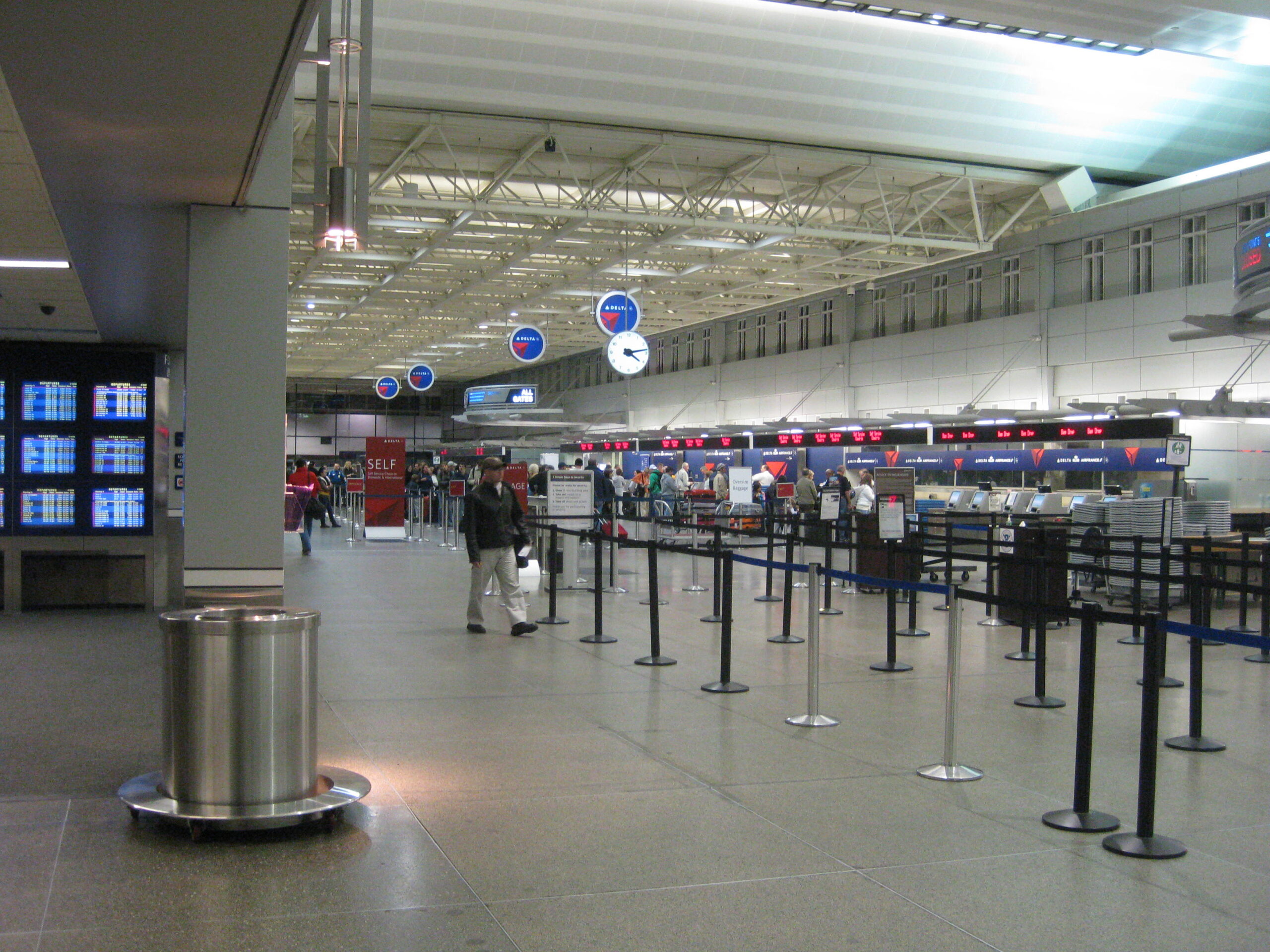
Minneapolis-Saint Paul takes second place because it combines a major connecting network with relatively traveler-friendly facilities. Delta is the largest airline at MSP, and most major full-service airlines use Terminal 1, reducing the likelihood that a traditional connecting itinerary will require a terminal change.
Terminal 1 contains several connected concourses. Travelers may still face a substantial walk when gates are far apart, but the layout provides multiple paths and moving assistance in parts of the terminal. MSP is also known for extensive dining, seating, shopping, and passenger services, which matter when a connection becomes longer than planned.
There is one important complication: MSP has two separate terminals. Terminal 2 serves a different group of airlines. Passengers who actually need to switch between Terminal 1 and Terminal 2 can use the METRO Blue Line light rail service, which connects the terminals free of charge. However, a terminal transfer is not the kind of connection you want to discover with only 40 minutes remaining.
For a standard Delta-to-Delta domestic itinerary, MSP is especially practical. It also works well for families because food, restrooms, seating, and other services are widely distributed rather than concentrated in one small part of the airport.
Booking tip: Verify the terminal for both airlines before buying a tight connection. Staying entirely within Terminal 1 removes one of MSP’s biggest potential complications.
#3 Salt Lake City International Airport (SLC)
Salt Lake City International Airport has undergone a major redevelopment that replaced its older terminals with a modern centralized facility. The current design uses a main terminal with Concourses A and B, making the overall structure easier to understand than airports with multiple disconnected terminal buildings.
A major improvement for connecting travelers was the opening of the Central Tunnel between Concourses A and B. The approximately 1,000-foot tunnel provides an additional connection between the concourses and helps reduce some of the long walking issues associated with the earlier stages of the rebuilt airport.
SLC still deserves one warning: distances can be significant. A passenger arriving at one end of a concourse and departing from a distant gate should not assume that a compact-looking map means a five-minute walk. Travelers who move slowly should leave extra time.
Where SLC performs particularly well is simplicity. There are fewer terminal decisions to make, Delta has a large hub operation there, and signage within a newly built facility is generally easier to follow than navigating a patchwork of terminals added over many decades.
It is a particularly useful connection point for trips between smaller western cities and destinations elsewhere in the United States.
Booking tip: Do not judge an SLC layover solely by the number of concourses. Check your gates when you land and start moving promptly if the connection crosses between A and B.
#4 Hartsfield-Jackson Atlanta International Airport (ATL)
Atlanta may seem like a surprising choice for a stress-free list. It is enormous and handles extraordinary passenger volumes. Yet the airport’s basic connecting layout is one of its greatest strengths.
ATL’s concourses are arranged in sequence and connected by the underground Plane Train. The system links the domestic terminal area and concourses T, A, B, C, D, E, and F. Airport information says trains run roughly every two minutes under normal operations. Passengers can also walk along the underground transportation mall if they prefer.
This means that changing from Concourse A to Concourse E does not require learning an entirely new terminal system or taking a road shuttle. For most domestic connections, travelers stay behind security, board the Plane Train, count the stops, and head to the new gate.
Atlanta also benefits connecting passengers through sheer flight frequency. Delta operates its largest hub at ATL, so many markets have multiple flights per day. More frequency does not guarantee protection after a missed connection, but having additional scheduled flights can provide more rebooking possibilities than connecting through a smaller airport with only one daily departure.
The downside is delay exposure. Atlanta’s huge operation can be affected by thunderstorms, air-traffic congestion, and disruptions elsewhere in Delta’s network. International arrivals may also require immigration, baggage procedures, and customs before continuing.
Booking tip: ATL is easier to navigate than its size suggests, but avoid treating a legal minimum connection as automatically comfortable. Extra time is valuable during summer thunderstorm periods.
#5 Denver International Airport (DEN)
Denver rounds out the list because its enormous physical footprint hides a fairly simple passenger layout. DEN has one main terminal and three secure concourses: A, B, and C.
The airport’s Train to the Gates connects the terminal with all three concourses. Denver says the train trip between the terminal and Concourse C takes less than 10 minutes under normal conditions. Stations are centrally located within each concourse, which makes the basic process easy to understand: reach the center, take the train, get off at the required concourse, and walk to the gate.
Concourse A has an additional advantage because it can also be reached using the pedestrian bridge from the terminal. That provides another route in certain circumstances.
DEN is especially useful for western U.S. itineraries because United, Southwest, and Frontier all operate substantial schedules there. The broad flight network can make Denver practical when traveling between cities that lack nonstop service.
Its biggest weakness is distance. The concourses are long, and a far-end gate can add considerable walking after the train ride. Denver weather can also disrupt schedules, particularly during winter storms and periods of strong wind.
Booking tip: A connection involving gates near opposite ends of different concourses needs more time than a simple B-to-B transfer. Gate assignments can change, so recheck the airline app after landing.
How Much Connection Time Should You Book?
There is no single perfect layover length. Airlines publish minimum connection requirements for specific airport and itinerary combinations, but a connection that is technically permitted may still feel rushed.
For many domestic trips, allowing about 60 to 90 minutes provides a more comfortable buffer than choosing the shortest itinerary available. Families with young children, travelers needing mobility assistance, and passengers checking complex itineraries may prefer even more time.
International-to-domestic connections generally deserve a larger buffer because passengers arriving in the United States may need to complete immigration and customs procedures. Requirements vary depending on the airport, itinerary, trusted-traveler status, baggage arrangements, and origin of the flight.
Also consider the consequences of missing the connection. A 45-minute layover is less risky when your airline has five later flights to your destination than when the connecting flight operates only once each day.
What to Check Before Booking a Connection
- Terminal and concourse: Find out whether both airlines normally operate from the same secure complex.
- Airside transportation: A train inside security can dramatically reduce transfer time.
- Flight frequency: More later departures may provide better recovery options after disruptions.
- Seasonal weather: Thunderstorms, snow, wind, and deicing can turn an otherwise easy airport into a difficult connection.
- International procedures: Confirm whether immigration, customs, baggage collection, or another security screening will be required.
- Your own walking needs: A connection that works for a frequent solo traveler may be unrealistic for a family or someone needing mobility assistance.
Frequently Asked Questions
What is the easiest major U.S. airport for connecting flights?
For this ranking, Detroit Metropolitan Airport comes out on top because the McNamara Terminal has a straightforward connecting layout and an ExpressTram that reduces walking along its mile-long main concourse. The best airport for an individual trip still depends on the airlines and gates involved.
Is Atlanta difficult for connecting flights?
Atlanta is extremely large, but its layout is surprisingly logical. The Plane Train connects every concourse in sequence, so most domestic transfers are simpler than the airport’s size might suggest.
Are short layovers always cheaper or better?
No. A shorter itinerary may look attractive during booking, but a missed connection can cost hours. When fares are similar, paying the same amount for an extra 20 or 30 minutes of connection time can be a sensible trade-off.
Should families book longer connections?
Usually, yes. Bathroom stops, slower walking, food needs, strollers, and unexpected gate changes can consume a short layover quickly. A moderate buffer can make the entire trip much easier.
Bottom Line
The easiest connecting airport is not necessarily the smallest one. Good design and fast transportation often matter more. Detroit’s ExpressTram, MSP’s organized hub structure, Salt Lake City’s modern layout, Atlanta’s Plane Train, and Denver’s simple concourse train system all reduce some of the uncertainty that makes airport connections stressful.
Before booking, compare more than the total trip time. Look at the connection airport, airlines, terminals, later flight options, and the amount of time between flights. Ten minutes spent checking the airport layout before purchasing a ticket can be far more valuable than saving ten minutes on the itinerary.
References
- Detroit Metropolitan Airport — Transportation Within the Terminal — Supports details about the McNamara Terminal ExpressTram, its three stations, and Concourse A transportation.
- Minneapolis-Saint Paul International Airport — Terminal Information — Supports current MSP terminal and airline information.
- Salt Lake City International Airport — Provides current airport maps, passenger information, and details about the rebuilt terminal and concourse system.
- Hartsfield-Jackson Atlanta International Airport — Supports information about ATL’s concourses, Plane Train, security access, and connecting-passenger procedures.
- Denver International Airport — Airport Facilities — Supports details about DEN’s three concourses and Train to the Gates.
- U.S. Bureau of Transportation Statistics — Airline On-Time Statistics and Delay Causes — Provides current federal data used to consider delay and cancellation exposure when evaluating connection airports.