
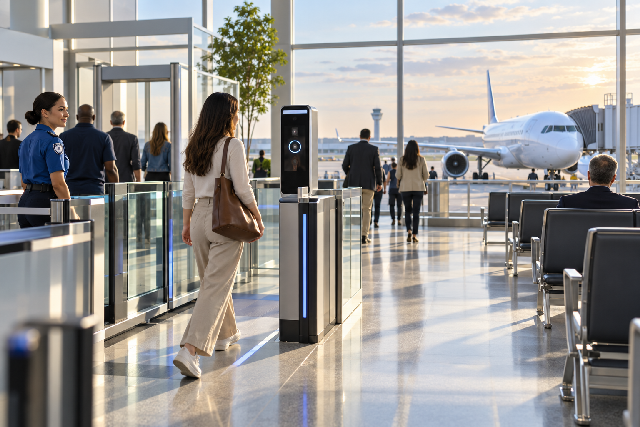
TSA PreCheck is becoming more than a shorter security line. Two newer features are changing how some travelers and even non-travelers can move through U.S. airports: Gateside by TSA PreCheck and TSA PreCheck Touchless ID.
They solve very different problems. Gateside can let an eligible person enter the secure side of an airport without flying that day. Touchless ID can let an eligible passenger use facial verification instead of presenting a physical ID at certain security checkpoints. Neither feature replaces regular TSA PreCheck, and neither is available in exactly the same way at every airport.
That distinction matters when planning an airport trip. Here is what travelers should know before changing their arrival time, leaving identification at home, or promising to meet someone at the gate.
What Is Changing With TSA PreCheck?
Standard TSA PreCheck still provides its familiar expedited screening benefits. Eligible passengers generally can keep shoes, belts and light jackets on and can leave compliant liquids and laptops in their bags. The newer programs build on that membership rather than replace it.
| Feature | Who it is for | Main benefit | Advance action required? |
|---|---|---|---|
| Standard TSA PreCheck | Eligible airline passengers | Expedited screening | Enroll and add your KTN to the reservation |
| Gateside by TSA PreCheck | Eligible people visiting an airport without flying | Access to post-security terminal areas without a boarding pass | Yes, generally 1 to 3 days before the visit |
| TSA PreCheck Touchless ID | Eligible PreCheck passengers on participating airlines | Facial identity verification at designated lanes | Yes, opt in through a participating airline or supported digital process |
Gateside Lets Some Non-Travelers Go Through Security
Gateside is one of the biggest changes because it addresses a rule many travelers have taken for granted for decades: normally, you need a boarding pass to enter the secure side of an airport.
With an approved Gateside pass, an eligible TSA PreCheck member or other qualifying Known Traveler Number holder can enter participating airports without having a departing flight. That could allow someone to walk a family member to the gate, greet an arriving traveler, meet a friend during a layover, or visit post-security restaurants and shops.
The important phrase is without having a departing flight. Gateside is not a replacement boarding pass and gives you no right to board an aircraft. It is authorization to enter eligible secure terminal areas after completing TSA screening.
Where Is Gateside Available?
Gateside began with 13 airports in September 2026, but the rollout is moving quickly. Airports including San José Mineta International, Piedmont Triad International, Gainesville Regional and Alexandria International have subsequently announced participation.
Denver is another example of why travelers should check the live system instead of relying only on an older airport list. Recent reporting citing TSA says Denver International Airport is available through the Gateside application even as older public-facing information may still show the original launch locations.
Alexandria International Airport in Louisiana announced Gateside availability on October 7, 2026. Its instructions illustrate how the program generally works: apply in advance, receive approval, bring acceptable identification and undergo TSA screening.
Because the rollout is changing rapidly, do not assume an airport is unavailable simply because it is missing from an article or older TSA announcement. Likewise, do not drive to an airport expecting access merely because you heard it participates. Check your airport in the Gateside application and obtain approval first.
How to Use Gateside
For most eligible visitors, the process is straightforward:
- Have an active TSA PreCheck benefit or qualifying Known Traveler Number.
- Go to the TSA Gateside application 1 to 3 days before the planned airport visit.
- Sign in through Login.gov or create an account if necessary.
- Select the participating airport and submit the requested traveler information.
- Check the portal to make sure your request has been approved before leaving for the airport.
- Bring an acceptable physical ID and go through security screening.
At Alexandria, for example, approved visitors are instructed to have their live portal dashboard available on a mobile device if requested. Children can be included with a parent or guardian when submitting the request.
An approved pass is generally valid for the authorized calendar day, and participating locations may permit same-day re-entry. Approval is not guaranteed, however. Airport capacity and security operations can affect availability.
Could Gateside Make Security Lines Longer?
Potentially, although Gateside participation is controlled rather than unlimited. Non-flying visitors still have to pass through security, so they add some people to checkpoint traffic.
For passengers, the practical lesson is not to reduce airport arrival time because Gateside exists. Airports can still experience long lines during holidays, weather disruptions and peak morning or afternoon departure banks.
Denver, for example, continues to recommend arriving well ahead of departure even with expedited screening options available. TSA also makes clear that expedited screening is never guaranteed. Lanes can close, staffing can change, and passengers can be directed to additional screening.
If your airport normally recommends arriving two hours before a domestic flight, having PreCheck or Touchless ID should be treated as extra convenience rather than permission to arrive at the last minute.
Touchless ID Is Different From Gateside
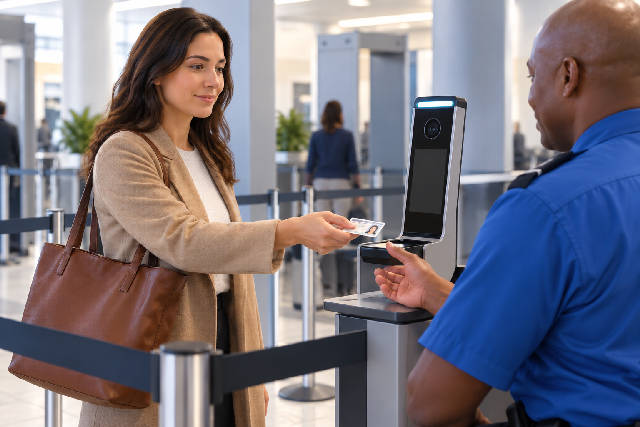
TSA PreCheck Touchless ID is designed for people who are actually flying. It uses facial comparison technology to verify an eligible passenger’s identity at specially equipped checkpoints.
Instead of handing a driver’s license to an officer, a participating traveler approaches the designated Touchless ID lane and looks into a camera. TSA’s system verifies the passenger’s identity and PreCheck eligibility.
TSA says Touchless ID is now available at dozens of U.S. airports. Participating airlines currently include American Airlines, Alaska Airlines, Delta Air Lines, Hawaiian Airlines, Southwest Airlines and United Airlines. Availability can still vary by airline and airport, so having Touchless ID with one carrier does not guarantee the same experience on another carrier at the same airport.
How Travelers Enroll in Touchless ID
Touchless ID is generally an opt-in service rather than an automatic feature of every PreCheck membership.
Eligibility typically requires a current TSA PreCheck benefit, a valid Known Traveler Number, a valid passport and a profile with a participating airline. Travelers add the required information and opt in through their airline account, app or supported check-in process.
For example, American Airlines asks eligible AAdvantage members to store their passport and KTN in their account and enable Touchless ID. Southwest requires eligible travelers to add passport information and their KTN through their Rapid Rewards account and app. Delta similarly requires a SkyMiles profile containing the necessary passport and PreCheck information.
When everything is set up correctly, look for the TSA PreCheck Touchless ID indicator on the mobile boarding pass. If the indicator does not appear, plan to use ordinary PreCheck screening instead.
Touchless ID Can Also Speed Up Bag Drop
At some airports the technology is moving beyond the security checkpoint. Denver and Southwest introduced a dedicated Touchless ID self-bag-drop option in April 2026. Delta also offers biometric bag-drop services at selected airports.
These services can reduce the number of times a traveler needs to pull out identification between entering the terminal and reaching the gate. But bag-drop availability is more limited than Touchless ID security screening, so check your airline’s airport-specific information before relying on it.
Do You Still Need to Carry Physical ID?
Yes. This is one of the most important planning rules.
Even when your airline says you are eligible for Touchless ID, TSA instructs travelers to carry an acceptable REAL ID-compliant physical identification document as a backup. Southwest and other participating airlines provide the same warning.
A biometric match can fail. A Touchless ID lane can be unavailable. Airport equipment can change. An airline employee may need to verify your identity elsewhere in the terminal.
So do not leave your driver’s license, passport or other appropriate identification at home simply because your boarding pass displays the Touchless ID symbol.
Has Regular TSA PreCheck Changed?
The core TSA PreCheck program remains separate from these added features. Enrollment is still offered through TSA-authorized enrollment providers, and eligibility generally lasts up to five years before renewal is required.
Pricing can differ among enrollment providers and renewal methods, so travelers should check TSA’s current enrollment page rather than relying on an old dollar amount from a travel article. Gateside itself does not add a separate visitor-pass fee for eligible users.
Most importantly, regular PreCheck still does not guarantee a particular waiting time or even expedited screening on every trip. TSA uses unpredictable security measures and can require additional screening when necessary.
What Travelers Should Do Before Their Next Airport Trip
If you already have TSA PreCheck, the new programs are useful bonuses, but your travel routine should remain conservative.
- Flying: Make sure your KTN is attached to the reservation and confirm the TSA PreCheck indicator appears on your boarding pass.
- Using Touchless ID: Opt in before arriving and verify that the Touchless ID indicator appears on your mobile boarding pass.
- Carry identification: Bring acceptable physical ID even when using facial verification.
- Using Gateside: Apply 1 to 3 days before the airport visit and verify approval before leaving home.
- Check airport conditions: Look at current checkpoint hours and wait times rather than assuming PreCheck lanes will always be open.
- Keep your normal time buffer: Do not make a tighter connection or arrive unusually late simply because a faster screening option exists.
Frequently Asked Questions
Can I go through TSA security without a boarding pass now?
At participating airports, an approved Gateside visitor can enter eligible secure terminal areas without a boarding pass. You must meet the program requirements, apply in advance and receive approval.
Is Gateside available to anyone?
No. It is tied to TSA PreCheck or other qualifying Known Traveler Number eligibility. Some airports separately operate their own visitor-pass programs with different requirements.
Can a Gateside visitor board a plane?
No. A Gateside pass provides terminal access, not air travel. An airline ticket and valid boarding authorization are still required to board a flight.
Does Touchless ID mean I can leave my driver’s license at home?
No. TSA advises participants to carry acceptable physical identification as a backup in case facial verification or the dedicated lane cannot be used.
Does Touchless ID cost extra?
It is an added feature for eligible TSA PreCheck travelers using participating airlines rather than a separate airport-security membership.
Should I arrive later because I have Touchless ID?
That is risky. The technology may save time at identity verification, but it does not protect you from long baggage lines, parking delays, airport traffic, closed lanes, additional screening or unusually heavy passenger volume.
The Bottom Line
TSA PreCheck is evolving into a broader airport-access system. Gateside can bring eligible non-travelers past security at participating airports, while Touchless ID can make identity checks faster for passengers who opt in through supported airlines.
Both can make airport visits easier, but neither eliminates advance planning. Gateside requires approval, Touchless ID depends on the airport and airline, and physical identification remains an important backup. For actual flights, travelers should continue using normal airport arrival guidelines rather than counting on technology to erase every possible delay.
The best approach is simple: check your reservation, airport and airline shortly before each trip. These programs are expanding fast enough that what was unavailable a few months ago may already be offered at your airport.
References
- Transportation Security Administration — TSA PreCheck Touchless ID — Supports Touchless ID eligibility, participating airlines, physical-ID backup guidance and current nationwide availability.
- Transportation Security Administration — TSA PreCheck — Official source for current enrollment options, provider pricing, eligibility and renewal information.
- San José Mineta International Airport — Gateside by TSA PreCheck — Confirms the expanding Gateside rollout and explains advance application and checkpoint procedures.
- American Airlines — TSA PreCheck Touchless ID — Supports airline opt-in requirements, airport availability and instructions for using Touchless ID.
- Southwest Airlines — TSA PreCheck Touchless ID — Supports current airport participation, physical-ID backup requirements and the Denver Touchless ID bag-drop option.
- Denver International Airport — Touchless ID Bag Drop — Confirms Denver’s dedicated Touchless ID security infrastructure and Southwest biometric bag-drop service.