
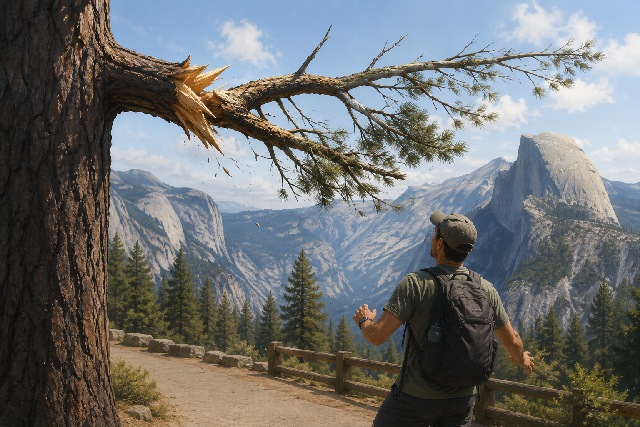
Yosemite is famous for granite cliffs, waterfalls, giant trees, and shady places to cool off during a hot summer visit. But some of those trees can create a hazard that is easy to overlook: large limbs can suddenly break and fall, sometimes even when the weather is calm.
The risk is especially important for travelers who camp, picnic, park, or rest beneath mature trees. Yosemite National Park has long warned visitors that trees and branches can fall without much notice, and summer conditions can make certain oak limbs particularly concerning.
This does not mean travelers need to avoid Yosemite or stay away from every tree. It does mean that where you place your tent, park your vehicle, or stop for lunch deserves a little more thought. Here is what summer visitors should know about sudden tree branch breaking in Yosemite and how to adjust a trip without ruining it.
Why Are Tree Branches Suddenly Breaking in Yosemite?
One of the unusual hazards found in Yosemite is sometimes called sudden limb drop or summer branch drop. A large limb can separate from a tree even when there is little or no wind.
The National Park Service has specifically discussed this behavior in oaks. Yosemite’s past ranger guidance notes that sudden oak limb drop is most commonly observed during warm summer weather when winds are calm.
The exact reason a particular branch fails is not always obvious. Tree health, internal decay, moisture conditions, structural weaknesses, previous damage, drought stress, and the weight of a large limb can all contribute to branch failure.
That is what makes this hazard different from a branch falling during a thunderstorm. Travelers often know to move away from trees when strong wind arrives. A limb that falls on a quiet, sunny afternoon is much harder to anticipate.
Why Summer Visitors Should Pay More Attention
Summer is one of Yosemite’s busiest travel seasons. It is also when visitors naturally look for shade.
After hiking in hot weather, sitting beneath a broad oak can seem like the perfect place for a break. Campers may prefer a shady tent site. Drivers may look for parking under trees to keep their cars cooler.
Those choices are understandable, but they can increase the amount of time you spend directly beneath large limbs.
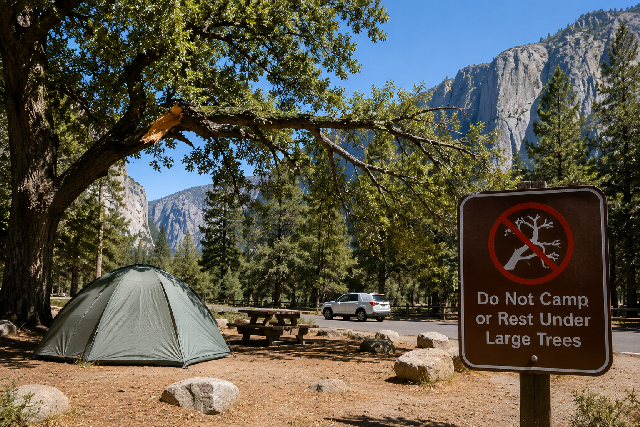
The National Park Service advises visitors to stay aware of their surroundings because trees, limbs, and branches can fall at any time. It specifically recommends being cautious when choosing places to camp, picnic, park, or rest.
Think of tree safety as another routine Yosemite check, similar to checking the weather, carrying enough water, watching trail conditions, and storing food correctly.
Where Travelers Should Be Most Careful
You do not need to inspect every tree like an arborist. Instead, pay extra attention anywhere you expect to remain stationary beneath trees for a long period.
| Situation | Why It Matters | Practical Choice |
|---|---|---|
| Camping | You may spend eight or more hours in one spot while sleeping. | Look above the tent area before setting up and avoid positioning directly beneath questionable large limbs. |
| Picnicking | Shade can encourage families to remain beneath one tree for a long time. | Check overhead before choosing your table or sitting area. |
| Trail breaks | Hot hikers often stop under the nearest large tree. | Scan the canopy before sitting directly beneath heavy branches. |
| Parking | A falling limb can damage a vehicle even when no one is inside. | Look upward before choosing a long-term parking spot. |
| Lodging grounds | Guests may relax outdoors under mature landscaping. | Use established seating areas and report visibly damaged branches to staff. |
What Should Campers Look for Before Setting Up a Tent?
Campers have one of the strongest reasons to perform a quick overhead check because a tent may remain in the same location all night.
Before unpacking, stand where the tent will go and look upward. You are not trying to determine whether a tree is officially hazardous. You are simply looking for obvious reasons to choose a different spot.
Examples include large dead limbs, hanging branches, cracked or partially detached limbs, severely leaning trees, visible trunk damage, or branches that appear to have already broken and become caught in the canopy.
Also look beyond the tree directly beside the campsite. A long limb can extend surprisingly far from the trunk.
If something looks concerning, ask campground staff whether another tent position within the assigned site is safer. Do not cut branches, move barriers, or relocate into an unassigned campsite on your own.
Should You Avoid Camping Under Every Oak Tree?
No. An oak tree’s presence does not automatically mean a campsite is unsafe.
California black oaks are an important part of Yosemite Valley’s landscape and ecosystem. The practical lesson from Yosemite’s branch-drop warning is not “stay away from all oaks.” It is to avoid becoming complacent simply because the weather is calm and a tree looks like a comfortable source of shade.
Pay attention to your surroundings, especially before spending hours beneath a large canopy.
Does Extreme Heat Increase the Risk?
The recent attention around sudden tree branch breaking in Yosemite has centered on hot summer conditions, and Yosemite’s own historical ranger information says sudden oak limb drop is most commonly associated with warm summer weather and calm winds.
However, travelers should be careful about treating temperature as a precise danger gauge. There is no useful rule such as “branches become dangerous above 95 degrees.”
A very hot forecast should instead serve as a reminder to think about several summer hazards at the same time.
You may be looking for shade more often. You may spend longer periods resting. Heat illness becomes a concern. Afternoon thunderstorms can also occur in the Yosemite wilderness, creating separate risks from wind and lightning.
Plan your day so you are not forced to choose an obviously questionable tree simply because it is the only shaded location nearby.
What About Hiking Trails?
Falling branches are not a reason to stop hiking Yosemite’s forested trails. The better approach is awareness.
While walking, periodically look around and above you, especially where dead trees or visibly damaged branches are present. Yosemite specifically advises hikers to remain attentive to trees and limbs.
The decision becomes more important when you stop.
Imagine that you reach a shady section of trail and want a 30-minute lunch break. Before dropping your backpack beneath the largest tree, spend a few seconds checking what is overhead. Moving 20 or 30 feet can sometimes put you away from a suspicious limb without changing your plans at all.
During strong wind, storms, or other rapidly changing weather, be even more cautious. Yosemite’s wilderness safety guidance also warns travelers about lightning during summer thunderstorms and advises avoiding tall isolated trees during storms.
Does Yosemite Have Tree-Related Closures Right Now?
Travelers should not assume that a general tree warning means Yosemite Valley or its campgrounds are closed.
Yosemite manages hazardous trees in developed areas and may remove trees, restrict access, or close areas when specific dangers are identified. Conditions can change, however, so a travel article cannot reliably tell you what will be open on the morning of your visit.
Before driving into the park, check Yosemite National Park’s official current conditions page. It lists important information about roads, trails, facilities, fires, and other disruptions.
If your trip involves a campground, trail, or section of the park affected by a temporary hazard, follow posted signs and ranger instructions rather than relying on an older itinerary or map.
How This Should Affect Your Yosemite Travel Plans
For most visitors, sudden branch drop should change small decisions rather than the entire vacation.
If you already have a campground reservation: Keep it. Inspect your immediate campsite when you arrive and follow instructions from campground staff.
If you are staying in a hotel or lodge: There is generally no reason to change accommodations solely because of this issue. Be thoughtful about where you sit, picnic, or park outdoors.
If you are planning long hikes: Continue checking trail conditions and weather. Add overhead tree awareness to your normal trail safety habits.
If Yosemite is experiencing extreme heat: Plan activities for cooler periods when practical, carry enough water, and know where you can take safer breaks without automatically relying on the largest tree for shade.
If an area is closed: Do not assume the closure will disappear by the time you arrive. Have a backup destination or trail ready.
A Simple Arrival Check for Campers and Day Visitors
When you reach Yosemite, use this quick sequence before settling into any outdoor location:
- Check the latest park alerts and current conditions.
- Check the day’s weather, including heat and thunderstorm risk.
- When choosing a place to sit, camp, picnic, or park, look upward.
- Avoid lingering beneath obviously dead, damaged, cracked, or hanging limbs.
- Respect closures, taped-off areas, signs, and ranger instructions.
- If you notice something that appears dangerous in a developed area, tell park or campground staff.
This takes very little time and can become part of your normal Yosemite routine.
Don’t Confuse Sudden Limb Drop With Sudden Oak Death
The names can create confusion.
Sudden limb drop describes a branch unexpectedly separating from a tree. Sudden oak death, on the other hand, is a plant disease caused by the pathogen Phytophthora ramorum.
They are not interchangeable terms. If you are searching online for Yosemite branch safety, use phrases such as “falling tree limbs,” “tree hazards,” or “sudden oak limb drop” rather than assuming information about sudden oak death describes the same problem.
Could Falling Branches Damage Your Car or Camping Equipment?
Yes. Tree hazards are not limited to injuries.
A large falling branch could damage a vehicle, tent, bicycle, camping equipment, or other property. That makes parking location worth considering even if everyone plans to leave the vehicle immediately.
You do not need to chase a perfectly treeless parking space. But if one available spot sits directly beneath a visibly damaged limb and another does not, the choice is easy.
The same logic applies to coolers, camp chairs, children’s play areas, and other equipment that may remain outdoors for hours.
Should Families With Children Take Extra Precautions?
The basic recommendations are the same for everyone, but families often spend more time in one location. Children may play around a campsite while adults prepare food, or a family may choose one shady picnic spot for much of the afternoon.
Do the overhead check before everyone gets settled.
It is also useful to explain the rule simply: if an area is blocked off or a ranger says not to stand beneath a tree, do not enter it. Children do not need frightening details about falling trees to understand that instruction.
Frequently Asked Questions
Can tree branches really fall when there is no wind?
Yes. Yosemite has documented sudden oak limb drop occurring during warm summer conditions when winds are calm. Wind is therefore not the only reason a branch may fail.
Are Yosemite’s oak trees unsafe?
No. Oaks are a normal and valuable part of Yosemite’s landscape. The warning is about recognizing that large limbs can sometimes fall unexpectedly, not about treating every oak as dangerous.
Should I cancel a summer Yosemite camping trip?
Not based on this hazard alone. Use normal tree-awareness precautions, check current park conditions, and follow campground or ranger instructions.
What should I do if I see a large hanging or cracked branch?
Do not stand beneath it. In a campground, parking area, lodging area, or other developed location, notify park or facility staff so they can assess the situation.
Where should I check for Yosemite safety updates before my trip?
Use the official Yosemite National Park website, particularly its current conditions, closures, weather, and safety information. Conditions inside a mountain park can change quickly, so check again shortly before arrival rather than relying only on information saved weeks earlier.
Bottom Line: Look Up Before You Settle Down
Sudden tree branch breaking in Yosemite is a real summer hazard, but it does not require travelers to dramatically redesign a Yosemite vacation.
The most useful adjustment is simple: look up before spending a long time in one place.
Check the canopy before pitching your tent. Take a moment before placing picnic chairs under an oak. Scan the area before choosing a shaded hiking break. Think about overhead branches before leaving your vehicle parked for the day.
Most importantly, combine tree awareness with Yosemite’s broader summer safety advice. Check current conditions, prepare for heat, watch changing weather, respect closures, and follow instructions from rangers and campground staff.
A few seconds of observation can help you make a better campsite, picnic, parking, or rest-stop decision without giving up the shade, scenery, and outdoor experiences that make Yosemite worth visiting.
References
- National Park Service — Danger in the Beauty Above — Yosemite ranger information describing sudden oak limb drop and its association with warm, calm summer conditions.
- National Park Service — Tree Mortality Can Cause Hazardous Conditions — Official visitor guidance on staying aware of falling trees and branches while hiking, camping, parking, picnicking, and resting.
- National Park Service — Tree Hazard Management in Yosemite — Explains how Yosemite defines and manages hazardous trees in developed areas.
- National Park Service — Yosemite Current Conditions — Official source for current road, trail, facility, fire, and park-condition updates before traveling.
- National Park Service — Yosemite Wilderness Safety — Provides broader summer hiking and weather safety guidance, including precautions during thunderstorms.