
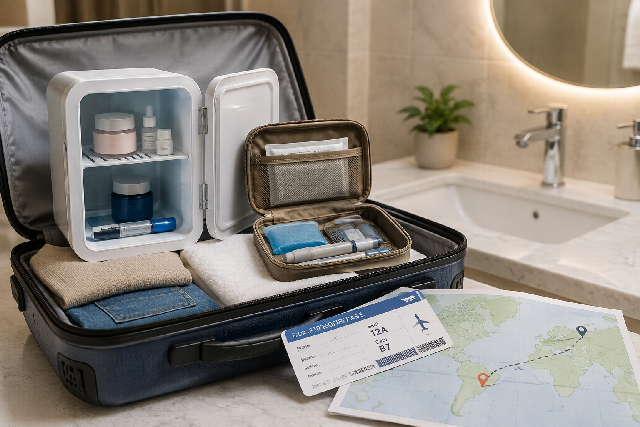
Bathroom mini fridges are becoming a popular home and travel accessory. These small coolers are often marketed for eye creams, face masks, serums, cosmetics, drinks, and injectable medications. Growing use of temperature-sensitive drugs, including some GLP-1 medications, has also led more travelers to ask whether they need reliable refrigeration in their hotel room.
However, a small bathroom fridge is not automatically suitable for medicine. Some models cool only a limited number of degrees below the surrounding air. Others may become too cold, fluctuate overnight, or stop cooling when hotel power controls switch off. Travelers therefore need to separate convenience from medical necessity.
This guide explains when a mini fridge may be helpful, what to ask a hotel or vacation rental, how to carry refrigerated medicine through an airport, and when a portable cooler is a safer choice.
Why Bathroom Mini Fridges Are Trending
Several consumer habits are driving interest in compact bathroom refrigeration. Skincare buyers may enjoy the cooling feeling of chilled eye products, facial rollers, or masks. People living in shared homes may want a separate place for personal items. Travelers using injectable medicines may also prefer a small unit that keeps medication away from restaurant leftovers and frequently opened hotel refrigerators.
That does not mean every refrigerated item requires a dedicated bathroom appliance. Many skincare products are designed for normal room-temperature storage unless their label says otherwise. Likewise, some medicines that are normally refrigerated may remain usable at controlled room temperature for a limited period.
The correct rule depends on the exact product. Travelers should read the official storage directions, speak with a pharmacist, and avoid applying the instructions for one medication to another.
Bathroom Fridge, Hotel Minibar, or Medical Refrigerator?
These appliances may look similar, but they do not provide the same level of temperature control.
| Cooling option | Typical use | Main advantage | Main concern |
|---|---|---|---|
| Cosmetic mini fridge | Skincare, masks, rollers, small personal items | Compact and easy to place on a counter | May not hold a precise medical storage range |
| Hotel minibar | Drinks and packaged snacks | Already available in some rooms | May use sensors, limited space, or inconsistent cooling |
| Standard hotel refrigerator | Food, drinks, and sometimes medication | Usually offers stronger cooling | Temperature may be unknown without a thermometer |
| Medical-grade refrigerator | Temperature-sensitive medicines and clinical supplies | Designed for controlled storage and monitoring | Rarely installed inside ordinary guest rooms |
| Insulated medication travel case | Medication during flights, transfers, and day trips | Portable and independent of hotel equipment | Must be used according to its instructions to prevent freezing or overheating |
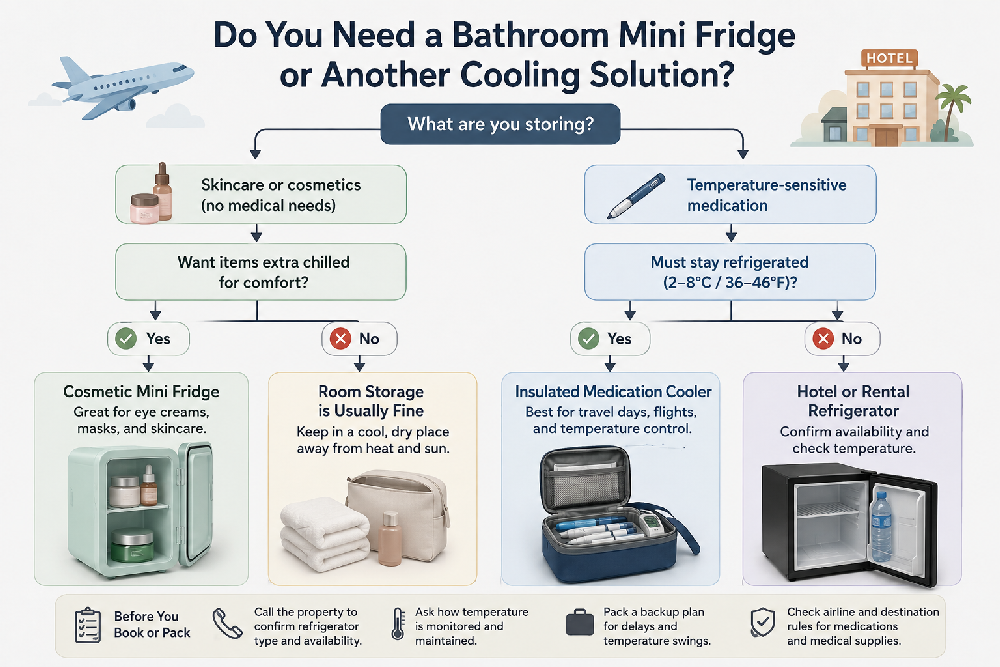
A cosmetic fridge may be perfectly adequate for a chilled face mask. It should not be treated as a medical refrigerator unless its specifications, temperature range, and monitoring features meet the storage requirements of the medicine.
Do Hotels Commonly Provide Bathroom Mini Fridges?
Dedicated bathroom fridges are not a standard feature at most hotels. A room may instead have a minibar, an empty refrigerator, a kitchenette refrigerator, or no cooling appliance at all. Even rooms advertised with a refrigerator may contain a very small unit that cannot accommodate a medication case.
Hotel listings can also use vague wording. “Minibar” may mean a stocked cabinet with electronic billing sensors. “Mini fridge” may mean an empty cooler. “Refrigerator available” could mean that guests must request one after arrival.
Call the property directly before booking when refrigeration is important. Ask:
- Is the refrigerator already inside the room?
- Is it empty, or is it a sensor-controlled minibar?
- Does it run continuously when the room is unoccupied?
- Can the hotel provide a separate refrigerator for medication?
- Is there a fee, deposit, or limited supply?
- Can staff store medicine securely if the room refrigerator fails?
Request written confirmation through email or the hotel messaging system. This reduces confusion at check-in, especially during busy periods when loaner refrigerators may already be assigned.
Vacation Rentals and Extended-Stay Hotels
A vacation rental or extended-stay property may be more practical for a longer trip. Full-size refrigerators generally offer more space and stable cooling than small hotel minibars. They can also make it easier to store food, reduce restaurant costs, and prepare meals around medication schedules.
Still, do not assume that a rental refrigerator is working correctly. Ask the host whether the appliance will be running before arrival. Once inside, check that it feels cold and use a small refrigerator thermometer when an exact range matters.
Avoid placing temperature-sensitive medicine against the cooling plate, freezer compartment, or back wall. These areas may become cold enough to freeze an item even when the rest of the refrigerator seems normal.
Traveling With GLP-1 and Other Temperature-Sensitive Medicines
Storage rules vary by medicine, manufacturer, pen type, country, and whether the product has already been used. Some injectable medications must remain refrigerated until use. Others may be kept below a stated room-temperature limit for a specific number of days.
For example, official Zepbound instructions state that the medication is normally refrigerated between 36°F and 46°F, or 2°C and 8°C. The product must not be frozen. Its official labeling also describes limited room-temperature storage, but travelers should check the current instructions for their exact presentation rather than relying on a general online summary.
Insulin products also have product-specific limits. The FDA explains that unopened insulin is generally stored under refrigeration, while time outside refrigeration can shorten how long it remains usable. Different insulin brands may have different room-temperature periods.
Before leaving, ask a pharmacist three direct questions:
- Must this exact product stay refrigerated throughout my trip?
- How long can it remain outside the refrigerator, and at what maximum temperature?
- What should I do if it becomes too warm, too cold, or frozen?
Write down the answers or carry the manufacturer’s storage instructions. This is especially helpful during international travel, cruises, long road trips, and airport disruptions.
How to Carry Refrigerated Medicine Through Airport Security
Keep essential medicine in your carry-on bag rather than checked luggage. Checked bags can be delayed, exposed to extreme temperatures, or lost. Aircraft cargo conditions may also be unsuitable for sensitive products.
The Transportation Security Administration allows medically necessary liquid medications in reasonable quantities that exceed the normal liquid limit. Travelers should tell the screening officer about these items before screening. Medically necessary gel packs and cooling accessories are also permitted, although they may require additional inspection.
Use the original labeled packaging when practical. Carry a copy of the prescription, medication list, or doctor’s note for international travel, even when it is not required for a domestic TSA checkpoint. Destination countries may have their own import limits, documentation rules, and restrictions.
Never place an injection pen directly against loose ice. Direct contact can freeze the medicine. Use a purpose-designed travel case or create a barrier according to the product and cooler instructions.
Should You Pack a Portable Bathroom Fridge?
For most travelers, packing a plug-in bathroom fridge is unnecessary. It takes up luggage space, may require a voltage converter overseas, and cannot protect medicine during the flight or transfer to the hotel. A compact insulated medication case is usually more useful because it travels with you.
A portable electric mini fridge may make sense for:
- A long road trip with reliable vehicle and hotel power
- An extended stay in housing without a refrigerator
- Frequent travel with skincare products that benefit from cooling
- A traveler who has verified that the unit maintains the required range
Check whether the device works on 120-volt and 230-volt systems before international travel. A plug adapter changes the shape of a plug; it does not always convert voltage. Also examine wattage, ventilation needs, noise, size, and whether the accommodation allows personal appliances.
When a Portable Medication Cooler Is the Better Choice
A medication cooler is generally the better travel tool when the main concern is protecting a prescription. Look for a case designed for the length and conditions of your journey rather than simply choosing the smallest or cheapest option.
Consider:
- How long the case maintains its stated temperature
- Whether it uses gel packs, evaporative cooling, or electric power
- Whether it could accidentally freeze the medicine
- Whether a temperature monitor is included
- How it will perform during delays or hot-weather transfers
- Whether replacement cooling packs are available at the destination
Test the cooler before the trip using a thermometer, but do not use medication as the test item. A trial run can reveal how quickly the interior cools, where cold spots form, and how long the temperature remains stable.
What About Skincare and Cosmetics?
Cooling skincare products can feel refreshing, especially in a hot destination. It may also make certain eye masks, facial tools, and gels more pleasant to use. However, cold storage does not automatically extend a product’s life or make it more effective.
Follow the label. Some formulas may thicken, separate, or become difficult to apply when chilled. Products with unstable ingredients may need protection from heat and sunlight, but not necessarily refrigeration.
For a short trip, store cosmetics in a cool, dry part of the room away from the window, bathroom steam, and direct sunlight. Ironically, the bathroom itself may be a poor storage location because showers create heat and humidity.
A Simple Booking Decision Guide
| Your situation | Best approach |
|---|---|
| Weekend trip with ordinary skincare | Use normal room storage unless the label requires cooling |
| Medicine allowed at room temperature for the entire trip | Follow the official temperature limit and protect it from heat |
| Medicine must remain refrigerated | Carry an approved cooler and confirm hotel refrigeration in advance |
| Long stay with food and medication needs | Choose an extended-stay hotel or rental with a full refrigerator |
| Remote destination or frequent power outages | Develop a backup cooling plan with a pharmacist before departure |
| Cruise or organized tour | Contact the operator’s accessibility or medical services team before booking |
Common Mistakes to Avoid
Do not assume a minibar is cold enough for medication. Do not store a pen beside a freezer plate. Do not leave medicine in a parked car, even inside a cooler, without confirming that the required temperature can be maintained.
Avoid relying only on how cold an appliance feels. Use a thermometer when temperature is medically important. Do not continue using a product after suspected freezing or overheating without consulting a pharmacist, healthcare professional, or manufacturer.
Finally, do not wait until check-in to mention a medical refrigeration need. Hotels may have only a few loaner units, and staff may need time to arrange secure storage.
Frequently Asked Questions
Can I put medication in a cosmetic mini fridge?
Only when the fridge can reliably maintain the exact storage range listed for the medication. Many cosmetic coolers are not designed or monitored for medical use. Confirm the device’s performance and speak with a pharmacist.
Can a hotel keep my medicine in its kitchen refrigerator?
Some properties may offer secure staff refrigeration, but policies vary. Ask how the medicine will be labeled, who can access it, when it can be retrieved, and whether the temperature is monitored. Never assume this service will be available.
Can I take gel ice packs through TSA security?
Yes. TSA permits medically necessary gel packs in reasonable quantities. Tell the officer that they are being used for medication. The packs and medicine may receive additional screening.
Should medicine go in checked baggage?
Essential medication should normally stay in your carry-on. Checked luggage may be delayed or exposed to unsuitable temperatures. Keep enough medicine and supplies with you for possible travel disruptions.
Do I need a fridge for GLP-1 medication on every trip?
Not always. Some products have a limited room-temperature storage option. The allowed time and maximum temperature differ by product. Check the current official label for your exact medication and presentation.
Is a hotel room refrigerator free?
It depends on the property. Some rooms include one, while other hotels charge for a loaner or offer one free only for medical needs. Confirm the arrangement and any fee before booking.
The Bottom Line
Bathroom mini fridges are attracting attention because they offer convenient storage for skincare and small personal items. For travelers, however, the most important question is not whether a fridge looks convenient. It is whether the cooling method matches the item’s actual storage requirements.
Ordinary cosmetics may need only protection from heat and sunlight. Temperature-sensitive medicines require closer planning. Read the official label, speak with a pharmacist, carry essential medication in your hand luggage, and confirm hotel refrigeration before arrival.
A portable medication cooler is often more practical than packing a bathroom fridge because it protects medicine throughout the journey, not just after check-in. With the right preparation, travelers can avoid last-minute refrigerator searches and focus on enjoying the trip.
References
- Transportation Security Administration: Liquid Medications — Explains airport screening rules for medically necessary liquids carried in hand luggage.
- Transportation Security Administration: Gel Ice Packs — Supports guidance about carrying cooling packs through U.S. security checkpoints.
- U.S. Food and Drug Administration: Insulin Storage Information — Provides general refrigeration guidance and cautions about insulin exposed to warmer conditions.
- Eli Lilly: Zepbound Use and Storage — Provides manufacturer instructions on refrigerator temperature and protection from freezing.
- National Library of Medicine: DailyMed — Offers current medication labeling that travelers can use to verify product-specific storage requirements.
- U.S. Food and Drug Administration: Safe Refrigerator Storage — Explains standard refrigerator temperatures and the value of checking appliances with a thermometer.