
An island vacation can feel international without requiring an international trip. For U.S. citizens, several tropical and coastal destinations are reachable as domestic travel, which can simplify entry rules and remove the need to obtain or renew a passport before departure.
That does not mean every passport-free island trip is equally easy or affordable. Airfare, ferry schedules, rental cars, hurricane season, lodging demand, and local transportation can have a much bigger effect on the final cost than the passport question itself. Travelers flying domestically should also remember that adults generally need a REAL ID-compliant license or another form of identification accepted by the Transportation Security Administration.
These five destinations are ranked using a practical mix of beach and sightseeing options, lodging choices, transportation convenience, likely trip costs, seasonal considerations, and ease of reaching the island from the continental United States.
| Rank | Destination | Best For | Main Access | Car Needed? |
|---|---|---|---|---|
| 1 | Puerto Rico | Best all-around island vacation | Nonstop and connecting domestic flights | Not in San Juan; useful for exploring |
| 2 | St. Thomas, U.S. Virgin Islands | Caribbean beaches and island hopping | Domestic flights | Optional |
| 3 | Maui, Hawaii | Scenery and resort vacations | Domestic flights | Strongly recommended |
| 4 | Key West, Florida | Short tropical-style getaway | Flights, driving, or ferry | Usually unnecessary in town |
| 5 | San Juan Islands, Washington | Nature and cooler-weather escapes | Drive plus ferry | Helpful but not always essential |
#1 Puerto Rico

Puerto Rico takes the top spot because it combines easy domestic access with beaches, historic neighborhoods, restaurants, mountains, rain forest scenery, and a wide range of hotels. U.S. citizens traveling between the mainland and Puerto Rico do not need a passport.
San Juan is particularly convenient for a shorter trip. Visitors can stay around Condado, Isla Verde, or Old San Juan and use taxis, rideshare services, tours, and walking rather than automatically renting a car. That can remove several hundred dollars in rental and parking expenses from a vacation.
Travelers who want to see more of the island may find a rental car worthwhile. El Yunque National Forest, coastal towns, beaches outside the San Juan area, and Puerto Rico’s mountainous interior are easier to explore with independent transportation.
The island also has one of the broadest lodging ranges on this list, from major resorts to vacation rentals and smaller independent hotels. That makes Puerto Rico easier to adjust to different budgets than destinations dominated by high-end resorts.
Booking consideration: Winter is popular because travelers from colder parts of the United States are looking for warm weather. Prices can rise around Christmas, New Year’s, Presidents Day week, and spring break. Late summer and fall may produce lower rates, but Atlantic hurricane season runs from June through November. Flexible or refundable reservations are particularly valuable during that period.
Why it ranks #1: Puerto Rico offers the strongest combination of frequent air access, varied lodging, beaches, culture, sightseeing, and the ability to take a satisfying vacation without needing a rental car for every day.
#2 St. Thomas, U.S. Virgin Islands

For travelers who want a classic Caribbean vacation without obtaining a passport, St. Thomas is one of the strongest choices. U.S. citizens traveling to the U.S. Virgin Islands from the mainland or Puerto Rico do not need a passport.
St. Thomas has an additional advantage: it can serve as a base for visiting nearby St. John. Ferries connect the islands, allowing travelers to combine resorts, shopping, beaches, snorkeling, and protected natural areas during the same vacation.
Local transportation requires more planning than in central San Juan. Taxis are widely used, while rental cars offer greater freedom for visitors planning to move between beaches and attractions. Travelers should remember that motorists drive on the left in the U.S. Virgin Islands, even though vehicles typically have steering wheels on the left side.
Another important detail is the departure process. Although U.S. citizens do not need a passport, travelers departing the U.S. Virgin Islands may encounter U.S. Customs and Border Protection procedures. Official tourism guidance recommends that U.S. citizens carry evidence of citizenship if they are not traveling with a passport.
Booking consideration: Winter demand can make Caribbean airfare and hotels expensive. Compare the total vacation cost rather than just the room rate. Airport transfers, taxis, ferry tickets, resort fees, meals, and beach excursions can substantially change the final bill.
Hurricane season is also an important consideration from June through November. Travel insurance or flexible cancellation policies can be especially useful for late-summer and early-fall trips.
Why it ranks #2: St. Thomas delivers the strongest traditional Caribbean experience on the list while still allowing U.S. citizens to travel without a passport.
#3 Maui, Hawaii

Maui offers a completely different type of passport-free island vacation. Because Hawaii is a U.S. state, travel from the mainland is domestic. U.S. citizens do not need a passport, although adult air travelers still need identification accepted by TSA.
Maui earns a high ranking because of its mix of beaches, resorts, volcanic landscapes, scenic drives, snorkeling, and outdoor activities. Travelers can build anything from a quiet resort vacation to a road-trip-style itinerary.
The tradeoff is cost. Flying to Hawaii generally takes longer than flying to Puerto Rico, Florida, or many Caribbean destinations from much of the continental United States. Lodging, rental cars, meals, parking, and resort fees can also push the total vacation budget upward.
A rental car is usually worth including in the budget. Resort areas can be enjoyed without constant driving, but many of Maui’s major attractions are spread across the island. Travelers who want to explore beyond their hotel should compare rental rates before booking flights because vehicle prices can fluctuate during busy periods.
Maui’s seasonal planning differs from the Atlantic and Caribbean islands. Hawaii is not generally booked around a traditional Caribbean hurricane-season strategy, but weather varies significantly around the island and road conditions can affect sightseeing plans.
Booking consideration: Do not judge a Maui deal from airfare alone. A low flight price can still lead to an expensive trip after adding a rental vehicle, hotel parking, resort charges, and food. Travelers with flexible dates should compare complete vacation totals across several weeks.
Why it ranks #3: Maui provides exceptional scenery and a true long-haul island escape without international entry requirements, but transportation and lodging costs make it less budget-friendly than Puerto Rico or St. Thomas.
#4 Key West, Florida
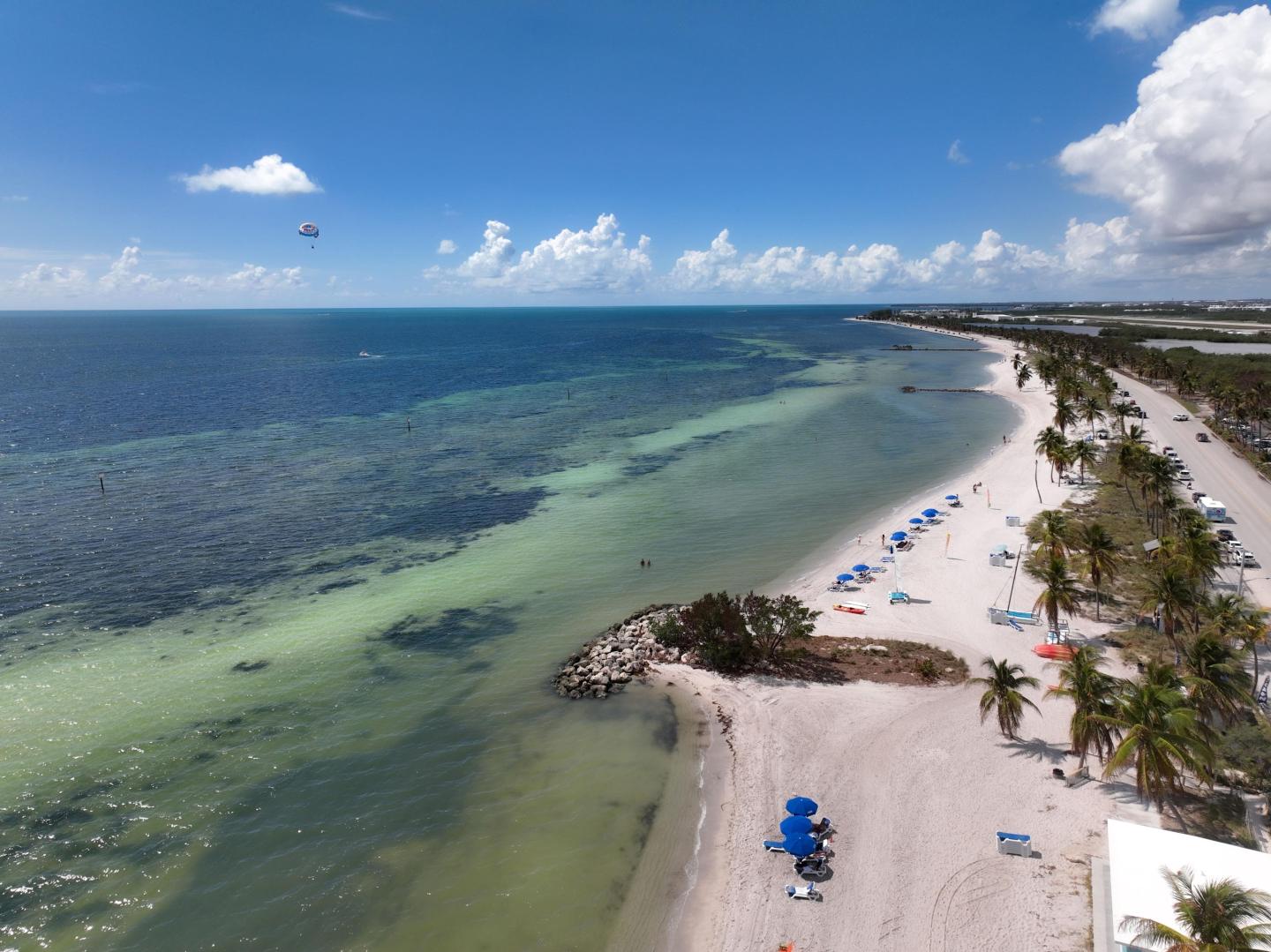
Key West provides an island atmosphere without leaving Florida, making it one of the easiest options for travelers who want tropical scenery but do not necessarily want a Caribbean or Hawaii flight.
Visitors can fly directly into Key West, drive along the Overseas Highway through the Florida Keys, or use ferry service from Florida’s Gulf Coast. The Key West Express operates routes connecting Key West with southwest Florida, although schedules should always be checked for the exact travel dates.
Once travelers reach central Key West, a rental car can become more trouble than help. Parking can be expensive or limited, while many restaurants, attractions, shops, and waterfront areas are concentrated within a relatively compact section of the island. Walking, bicycles, hotel shuttles, taxis, and local transportation can cover many trips.
The biggest drawback is lodging cost. Key West hotel prices can be surprisingly high, especially during winter and major events. Travelers who assume a domestic Florida trip will automatically be cheap may find that accommodations cost more than airfare to a Caribbean destination.
Weather also deserves attention. South Florida and the Keys are within the Atlantic hurricane region, with the June-through-November season creating additional uncertainty. Summer can also be hot and humid.
Booking consideration: Compare three approaches: flying directly to Key West, flying to Miami or Fort Lauderdale and renting a car, and using the ferry when its schedule fits. The cheapest airfare does not always produce the cheapest total trip after ground transportation and parking are included.
Why it ranks #4: Key West is extremely convenient for a passport-free getaway and works well for shorter vacations, but high lodging rates prevent it from ranking higher.
#5 San Juan Islands, Washington

The San Juan Islands prove that an island getaway does not have to involve palm trees. Located in Washington State between the mainland and Vancouver Island, the archipelago offers forests, coastal scenery, wildlife viewing, kayaking, small towns, and a much cooler climate than the tropical destinations above.
The primary planning issue is the ferry. Washington State Ferries operates service from Anacortes to Friday Harbor on San Juan Island as well as Orcas, Lopez, and Shaw islands. Vehicle reservations are available for the Anacortes-San Juan Islands route and are recommended, particularly during busy travel periods.
Travelers can also visit without a vehicle, which may reduce costs and eliminate concerns about limited vehicle space on a sailing. However, transportation options become more limited after arrival, so visitors should consider where they are staying and what they plan to do before choosing to arrive as walk-on passengers.
Ferry schedules change seasonally, and service disruptions can affect carefully timed itineraries. Washington State Ferries advises travelers to check current schedules and alerts. Travelers bringing a vehicle should reserve early rather than assuming they can simply arrive for a preferred sailing.
The cost structure is different from Hawaii or the Caribbean. There may be no expensive long-distance flight for travelers in the Pacific Northwest, but ferry fares, vehicle charges, rental cars, and summer lodging can add up. Washington State Ferries also applies a 3% cost-recovery surcharge to credit and debit card ticket transactions as of March 1, 2026.
Booking consideration: Summer offers the most appealing weather but also creates the greatest competition for accommodations and ferry reservations. Shoulder-season trips may be quieter, though travelers should prepare for cooler and wetter conditions.
Why it ranks #5: The San Juan Islands are an excellent domestic nature getaway, particularly for West Coast travelers, but ferry logistics and seasonal weather make the trip less universally convenient than the four destinations above.
What Identification Do You Need for a Passport-Free Island Trip?
“No passport required” does not mean “no identification required.” Since May 7, 2025, adults age 18 and older generally need a REAL ID-compliant driver’s license or another TSA-accepted form of identification to pass through airport security for domestic flights.
Puerto Rico, Hawaii, Florida, and Washington are domestic destinations. The U.S. Virgin Islands are also a U.S. territory and do not require U.S. citizens to carry a passport when arriving from the mainland or Puerto Rico. However, because of customs procedures when leaving the Virgin Islands, carrying a passport can still be convenient. Travelers without one should review current U.S. Virgin Islands and CBP guidance regarding acceptable evidence of U.S. citizenship.
How to Choose the Right Island
Choose Puerto Rico if you want the best balance of beaches, culture, flight access, and transportation choices. Pick St. Thomas if a Caribbean beach vacation is the main goal. Choose Maui for dramatic scenery and a longer resort-and-road-trip experience. Consider Key West for a shorter domestic escape, particularly from the eastern United States. Choose the San Juan Islands if wildlife, kayaking, forests, and cooler weather sound more appealing than tropical beaches.
Before paying, compare the entire trip rather than the advertised airfare or hotel rate. Check airport transfers, ferry tickets, rental-car costs, parking, resort or destination fees, and cancellation rules. For islands affected by Atlantic hurricane season, flexible booking terms can be worth paying slightly more for.
Frequently Asked Questions
Can U.S. citizens visit Puerto Rico without a passport?
Yes. Travel between the continental United States and Puerto Rico is domestic travel for U.S. citizens.
Do U.S. citizens need a passport for the U.S. Virgin Islands?
No passport is required for U.S. citizens traveling to the U.S. Virgin Islands from the U.S. mainland or Puerto Rico. Travelers should still carry appropriate identification and review citizenship-document guidance for departure procedures.
Can I fly to Hawaii without a passport?
Yes. Hawaii is a U.S. state. A passport is not required for U.S. citizens traveling domestically, but adults flying from the mainland need identification accepted by TSA.
When should I be most careful about hurricane risk?
Puerto Rico, the U.S. Virgin Islands, Key West, and other Caribbean or Atlantic destinations can be affected during the Atlantic hurricane season, which officially runs from June 1 through November 30. Monitor forecasts and airline or hotel change policies when booking during that period.
Does traveling without a passport automatically make the vacation cheaper?
No. Passport requirements have little relationship to total trip cost. Maui and Key West, for example, can have expensive lodging, while Puerto Rico may sometimes offer a lower total price despite requiring a longer flight for some travelers.
Conclusion
A passport-free island trip can remove one administrative obstacle, but choosing the right destination still requires careful planning. Puerto Rico earns the top ranking because it combines convenient domestic flights, a wide selection of lodging, beaches, culture, and manageable transportation. St. Thomas offers a stronger classic Caribbean feel, while Maui delivers some of the most dramatic scenery. Key West works especially well for shorter trips, and Washington’s San Juan Islands provide a completely different nature-focused experience.
Whichever island you choose, check identification requirements, transportation schedules, weather risks, and the total trip cost before booking. A little planning matters more than simply finding the lowest advertised airfare.
References
- U.S. Department of State — San Juan Passport Agency — Confirms that U.S. citizens can travel within the United States, Puerto Rico, and the U.S. Virgin Islands without using a U.S. passport for domestic travel.
- U.S. Virgin Islands Department of Tourism — No Passport Required — Provides current guidance for U.S. citizens visiting the U.S. Virgin Islands and explains REAL ID considerations.
- Transportation Security Administration — REAL ID — Explains identification requirements for adults passing through U.S. airport security checkpoints.
- Washington State Department of Transportation — Washington State Ferries — Provides current San Juan Islands ferry schedules, reservations, tickets, and service alerts.
- Washington State Ferries — Ticket Information — Supports information on vehicle fares, peak-season charges, reservations, and the 3% card-payment surcharge introduced in 2026.
- Key West Express — Provides current ferry information for service between southwest Florida and Key West.