
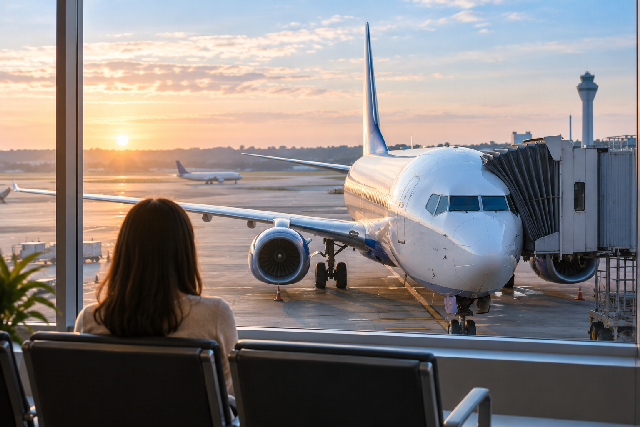
Boeing is back in the headlines in 2026, and travelers may wonder whether the latest news should change the way they book flights. Search interest in Boeing has recently jumped sharply, while stories range from large corporate deals and financial pressures to new aircraft deliveries and certification developments.
For passengers, however, not every Boeing headline matters equally. A multibillion-dollar business problem may have little immediate effect on your vacation. A change in aircraft production, airline deliveries, certification, or an FAA safety requirement can be much more relevant.
The useful question is not simply, “What is happening at Boeing?” It is, “Could this change my flight, fare, seat, schedule, or travel plans?” Here is what travelers should know before booking.
What Is Changing at Boeing in 2026?
Several different Boeing stories are happening at the same time. Some involve defense, space, or corporate finances. Others involve the commercial airplanes passengers actually fly on.
One important development came on August 3, 2026, when the Federal Aviation Administration certified the Boeing 737-7, also known as the 737 MAX 7, for commercial service. The FAA said the certification followed an extensive review covering areas including flight controls, human factors, system safety, flightcrew alerting, and a redesigned engine anti-ice system.
Boeing is also working toward certification of the larger 737-10. The company said in late July that planned certification flight testing had been completed, although additional regulatory review and certification work remained.
Meanwhile, airlines continue receiving Boeing aircraft already in service. Boeing reported delivering 171 commercial airplanes during the second quarter of 2026, including 129 aircraft from the 737 family and 25 Boeing 787s.
For travelers, those deliveries matter because airlines need aircraft before they can reliably add flights, replace older planes, or expand certain routes.
Which Boeing Headlines Actually Matter to Travelers?
| Type of Boeing news | Possible traveler impact | What to do |
|---|---|---|
| Aircraft deliveries | Can affect airline capacity, new routes, and schedules | Watch your airline’s timetable and aircraft assignment |
| FAA certification | Allows a new aircraft model to enter commercial service | No special action is normally required |
| Production delays | May slow airline expansion or replacement plans | Be cautious about relying on newly announced routes far in advance |
| FAA airworthiness directives | May require airlines to inspect, modify, or repair aircraft | Check FAA or airline information if a major issue receives widespread attention |
| Corporate financial news | Usually little immediate impact on an existing passenger booking | Look for a direct connection to commercial aircraft before changing plans |
| Defense or space contracts | Normally unrelated to airline passengers | Do not assume every Boeing headline affects commercial flights |
Could Boeing Production Changes Affect Flight Prices?
They can, but usually indirectly.
Airlines plan their schedules around the airplanes they expect to have available. If an airline receives fewer aircraft than planned, it may have less capacity to add frequencies or launch routes. When fewer seats are available on a popular route, fares can sometimes remain higher than they otherwise would.
The opposite can also happen. More deliveries can give an airline room to expand its schedule, replace older aircraft, or move airplanes between markets.
That does not mean a Boeing production change will immediately increase the price of your next ticket. Airfare also depends on fuel costs, demand, competition, season, airport capacity, and airline pricing strategy.
For a traveler, the practical lesson is simple: watch the airline rather than Boeing’s stock price. The strongest sign that aircraft availability is affecting your trip will usually appear in the airline’s schedule.
Aircraft Changes After Booking Are Normal
You might book a flight showing a Boeing 737-8 and later see a different aircraft listed. This is called an aircraft substitution or equipment change.
Airlines regularly swap airplanes for operational reasons. A change does not automatically mean there is a safety problem.
However, an aircraft change can affect your travel experience. The replacement airplane may have a different seat layout, fewer premium seats, different overhead-bin space, or different entertainment equipment.
This matters most when you paid extra for a specific seat or chose a flight because of the aircraft.
A good habit is to check your reservation again about a week before departure and once more when online check-in opens. If the aircraft changed, review the seat map. Your original seat number may still exist but may no longer be the type of seat you expected.
What the Latest FAA Safety Actions Mean
The FAA continues to oversee Boeing aircraft through certification, factory inspections, audits, and airworthiness directives.
In July 2026, the FAA announced that Boeing could resume issuing airworthiness certificates for newly produced 737 MAX and 787 aircraft under FAA oversight. The agency said the decision followed eight months of production-quality data and safety review. The FAA also said inspectors would continue monitoring Boeing’s production system.
There have also been aircraft-specific directives in 2026. For example, an FAA directive effective July 20 required action on certain Boeing 787 aircraft involving an issue in which the selected altitude on a mode control panel could change without being commanded. Another directive effective August 6 covered door-assist-handle hardware on certain 787 aircraft.
An airworthiness directive does not necessarily mean passengers should avoid the aircraft involved. These rules tell aircraft owners and operators what inspections, replacements, or modifications must be completed to address a safety concern.
If an aircraft is legally operating a scheduled commercial flight, the airline is responsible for meeting applicable regulatory requirements.

Should You Avoid Boeing Aircraft When Booking?
For most travelers, choosing a flight solely because the aircraft is or is not made by Boeing is not the most useful booking strategy.
Instead, compare factors that directly affect your trip: nonstop versus connecting service, departure time, ticket flexibility, airline reliability, seat configuration, and the availability of alternative flights if something goes wrong.
If you personally feel uncomfortable flying a particular aircraft model, many airline booking pages show the scheduled aircraft before purchase. You can use that information when comparing options.
Just remember that the listed aircraft is not guaranteed. Airlines can substitute equipment before departure.
What Boeing Deliveries Could Mean for New Routes
Aircraft deliveries are especially important when an airline announces aggressive expansion.
Imagine an airline announces a new daily route beginning several months from now. The carrier expects new aircraft to arrive before the launch date. If deliveries remain on schedule, the airline can proceed as planned. If aircraft arrive late, the carrier may reduce frequency, delay the launch, substitute another airplane, or reshuffle its existing fleet.
This is why travelers booking brand-new routes should pay slightly more attention to schedule changes than travelers booking established routes with multiple daily flights.
If a new route is critical to a cruise, wedding, international connection, or other fixed event, consider leaving extra time in your itinerary. A route with several backup flights gives you more options than a new service operating only a few times per week.
A Practical Boeing Travel Checklist
- Before booking: Compare schedules and backup flight options, not just aircraft type.
- After booking: Enable airline notifications for schedule and equipment changes.
- One week before departure: Check the flight time, aircraft, connection, and seat assignment again.
- At check-in: Recheck the seat map because an aircraft swap may have changed the cabin layout.
- For major safety headlines: Look for information from the FAA and your airline rather than relying only on social-media posts.
- For new routes: Build extra flexibility into important trips, especially when service is limited to a few flights each week.
What About the Boeing 737-7 and 737-10?
The 737-7 is the newest MAX variant to receive FAA certification. Certification means the model has been approved under applicable regulatory requirements for commercial operation. Travelers may begin seeing it in airline schedules as carriers take delivery and introduce it into their fleets.
The larger 737-10 is at a different stage. Boeing completed its planned certification flight testing in July 2026, but completion of flight tests is not the same thing as final FAA certification. Travelers should therefore avoid assuming that every announced future flight involving a 737-10 is guaranteed to operate with that aircraft until the model is certified and airlines actually receive their airplanes.
Even then, airlines can change equipment.
Frequently Asked Questions
Does Boeing’s financial trouble mean my flight could be canceled?
Usually not. A corporate loss or expensive contract does not automatically affect an individual airline flight. Look for news involving commercial-aircraft production, deliveries, regulatory restrictions, or your specific airline before assuming your itinerary is affected.
Can I find out whether my flight uses a Boeing airplane?
Usually yes. Most airline booking systems show the scheduled aircraft type. You can also check your reservation after purchase. The aircraft can still change before departure.
Does an FAA airworthiness directive mean the airplane is unsafe to fly?
Not necessarily. An airworthiness directive is a legally enforceable requirement telling operators what action must be taken to correct an identified condition. Airlines must comply with applicable requirements to continue operating affected aircraft.
Could delayed Boeing deliveries increase airfare?
Potentially, but the connection is indirect. Fewer available airplanes can limit how quickly airlines add seats or routes. However, fares depend on many other factors, including demand and competition.
Should I cancel a trip because Boeing is in the news?
News about Boeing alone is not a reason to cancel. Check whether the story affects commercial passenger aircraft, whether regulators have imposed operating restrictions, and whether your airline has changed your flight.
Bottom Line
Boeing news in 2026 deserves attention, but travelers should separate corporate headlines from developments that actually affect flying.
The most relevant issues are aircraft deliveries, production capacity, certification, FAA safety requirements, and airline schedule changes. The recent certification of the 737-7, continuing work on the 737-10, ongoing 737 and 787 deliveries, and continued FAA oversight are more useful to passengers than headlines about unrelated Boeing business deals.
Before your trip, focus on what you can control. Choose flights with reasonable backup options, monitor your reservation, check your seat after aircraft changes, and use official FAA or airline information when a safety story develops. That approach is far more useful than reacting to every Boeing headline.
References
- Federal Aviation Administration — Certification of the Boeing 737 MAX 7 — Supports the August 2026 certification status and describes the FAA’s safety review.
- Federal Aviation Administration — Boeing Airworthiness Certificate Oversight — Explains the FAA’s July 2026 decision on certification responsibilities and continuing production oversight.
- Boeing — Second Quarter 2026 Deliveries — Provides official commercial-aircraft delivery totals for the 737, 787, and other Boeing programs.
- Boeing — 737-10 Completes Final Certification Flight — Supports the current status of 737-10 flight testing and remaining certification work.
- Federal Aviation Administration — 2026 Boeing 787 Airworthiness Directive — Documents the FAA requirement addressing certain 787 mode-control-panel altitude issues.