
Winter travel planning for 2026–2027 is getting more complicated. Seasonal forecasts are drawing attention to a strengthening El Niño, while regional snowfall predictions are already circulating for places such as Colorado, Connecticut, Ohio, and other parts of the United States.
For travelers, the important question is not simply, “Will it snow a lot?” The better question is: How could this winter pattern affect flights, ski trips, rental cars, road conditions, hotel prices, and cancellation risk?
Long-range snowfall forecasts cannot tell you whether a snowstorm will hit Denver on a specific December weekend or whether a flight into Boston will be delayed in January. They can, however, help you recognize areas where winter conditions may deserve more attention and where flexible booking choices could be especially valuable.
What Has Changed in the Winter 2026–2027 Outlook?
The biggest development heading into the season is El Niño. In its August 2026 update, NOAA’s Climate Prediction Center said El Niño was strengthening and estimated a greater than 90% chance that it would become a very strong event during the Northern Hemisphere fall and winter of 2026–2027.
That is significant, but it should not be interpreted as a nationwide heavy-snow forecast. El Niño changes the odds of certain temperature and precipitation patterns. It does not guarantee that every region will follow the typical pattern.
NOAA’s seasonal outlooks are also expressed mainly in terms of temperature and total precipitation. Precipitation may fall as rain, snow, sleet, or freezing rain depending on local temperatures when a storm arrives.
That distinction matters for travelers. A wetter-than-normal winter does not automatically mean a snowier-than-normal winter. Likewise, a region could receive close to normal seasonal snowfall but still experience one disruptive storm during a busy holiday weekend.
Why Seasonal Snowfall Forecasts Matter for Travel
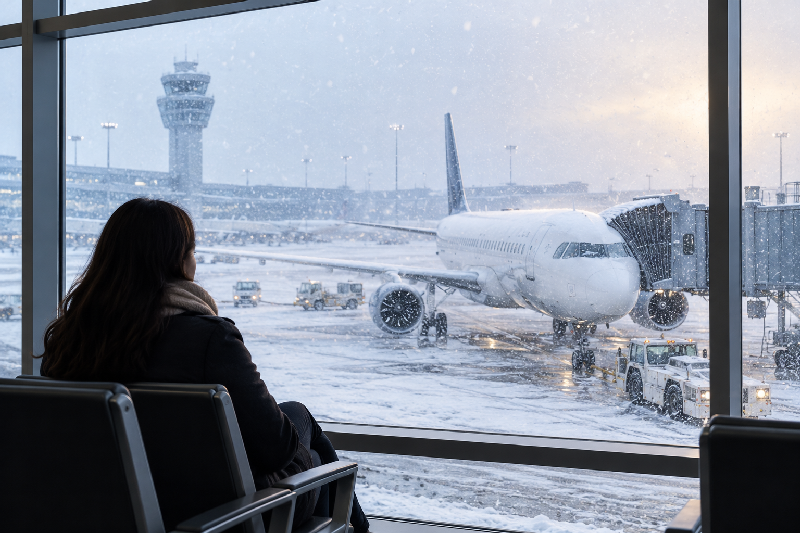
Winter weather affects nearly every stage of a trip. Heavy snow around an airport may slow departures and arrivals. A storm hundreds of miles away can also disrupt aircraft and crews before they reach your airport.
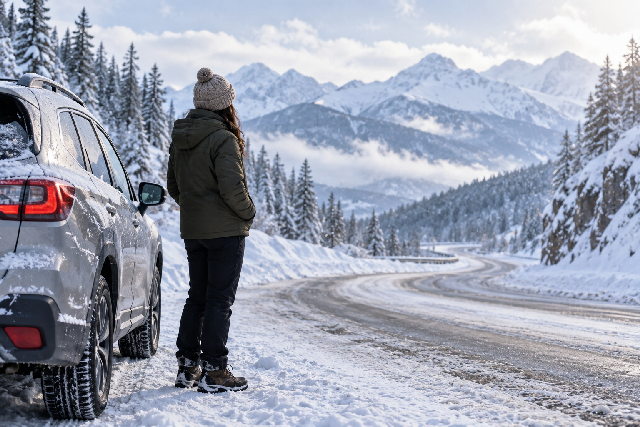
For road trips, the problem may be snow, freezing rain, black ice, poor visibility, or mountain pass closures. Ski travelers face another issue: too little snow can affect early-season terrain availability, while major storms can make getting to the resort difficult even when skiing conditions are excellent.
| Travel Decision | How Winter Weather Can Affect It | Practical Response |
|---|---|---|
| Flights | Delays, cancellations, deicing and missed connections | Favor longer connections and flexible tickets when practical |
| Hotels | Storm-related arrival changes or unexpected extra nights | Read cancellation deadlines before booking |
| Rental cars | Snow, ice and mountain driving conditions | Check vehicle type and local road requirements |
| Ski trips | Variable snowpack and storm access problems | Balance snow potential with transportation flexibility |
| Road trips | Closures, slow traffic and dangerous driving | Build alternate routes and extra time into the plan |
What the El Niño Forecast Actually Tells Travelers
NOAA reported in August that El Niño was strengthening rapidly. The agency also said there was a greater than 90% chance of a very strong El Niño during fall and winter 2026–2027.
A stronger El Niño can increase confidence in some broad climate tendencies, but NOAA specifically cautions that expected impacts are not guaranteed everywhere.
That means travelers should avoid making a major booking decision based on a headline that says a particular state is going to have a “huge snow year.” Seasonal forecasts describe probabilities over large regions and periods of several months. They are not storm forecasts.
For example, a ski traveler looking at Colorado may see reports predicting an active winter. That could be encouraging for skiing, but it does not tell the traveler whether conditions will be good during one specific January week. Nor does it tell them whether Interstate 70 will be clear on arrival day.
Snowfall and Precipitation Are Not the Same Thing
This is one of the easiest winter forecast concepts to misunderstand.
NOAA may forecast an increased probability of above-normal precipitation for a region. If temperatures are cold enough, that precipitation could contribute to snowfall. If temperatures are warmer, much of it may fall as rain instead.
The timing of individual storms therefore matters more for travelers than a seasonal precipitation category alone.
This is particularly important in places where temperatures regularly move above and below freezing, including parts of the Northeast, Mid-Atlantic and Midwest. A storm that begins as snow could change to sleet or freezing rain. Another storm during the same winter could be almost entirely rain.
What About Colorado and Ski Travel?
Colorado is receiving attention in early winter outlook discussions because snowfall has obvious consequences for ski tourism. Travelers considering Denver, Vail, Breckenridge, Aspen or other mountain destinations should treat seasonal snow predictions as one planning input rather than a guarantee.
More snow can improve skiing, but major snowfall can also make transportation harder. Denver International Airport may face deicing or operational delays, while mountain highways can become slow or temporarily difficult to navigate.
For a ski vacation, transportation flexibility can be just as important as snow depth. Avoid creating an itinerary where one short flight connection, one rental-car pickup and a long mountain drive must all work perfectly on the same evening.
If possible, arriving earlier in the day gives you more options if weather slows the trip.
What Travelers in the Northeast and Midwest Should Watch
Recent winter outlook coverage has also focused on places such as Connecticut and Ohio. These regions can experience a mix of snow, rain, freezing rain and rapid temperature changes.
For travelers, ice can sometimes be more disruptive than deep snow. Even a relatively small amount of freezing rain can create hazardous roads and affect airport operations.
Seasonal predictions months in advance cannot tell you which type of precipitation will occur on your travel day. Once a trip is within about a week, short-range forecasts become far more useful.
That is when travelers should shift attention away from broad seasonal outlooks and toward National Weather Service forecasts, airport updates and state transportation alerts.
Should You Book Winter Trips Now or Wait?
For most travelers, snowfall uncertainty alone is not a strong reason to postpone booking an entire winter vacation. Instead, consider changing how you book.
- Compare flexible and restrictive fares. A slightly cheaper ticket may not be worth it if changing the trip later would be difficult.
- Read hotel cancellation terms. Do not assume every reservation can be canceled on the day of arrival.
- Avoid extremely tight flight connections. Winter operations often take longer even when flights are still running.
- Consider nonstop flights. Each additional airport adds another place where weather can interfere with the itinerary.
- Check rental-car arrangements. Mountain or rural driving may require more preparation than city driving.
The goal is not to predict the exact storm months ahead. It is to create a trip that can tolerate disruption.
A Better Way to Plan a Winter Trip
Think of winter planning in three stages.
Several Months Before Travel
Use seasonal outlooks to understand broad possibilities. Choose destinations and reservations with reasonable flexibility. If you are planning a ski vacation, look at historical opening dates and the resort’s snowmaking capability rather than relying only on one seasonal prediction.
One to Two Weeks Before Travel
Start checking regional weather patterns. Look at your airline’s schedule, connection times and alternative flights. Road travelers should identify alternate routes.
Two to Three Days Before Travel
This is when specific weather forecasts become far more useful. Monitor National Weather Service watches and warnings, airline notifications, airport conditions and local transportation agencies.
If a significant storm is expected, changing plans before widespread cancellations begin can sometimes provide more options.
Winter Driving Deserves Extra Attention
The National Weather Service warns that winter storms can create dangerous conditions through snow, sleet, freezing rain, strong wind and low visibility.
If you are renting a car, do not assume that four-wheel drive makes icy roads safe. Vehicle traction can help with movement, but it cannot eliminate stopping-distance problems on ice.
For longer winter drives, check weather and road conditions before departure. Keep extra clothing, water and basic emergency supplies in the vehicle. In areas expecting severe winter weather, postponing nonessential driving may be the safest decision.
Travelers visiting mountain regions should also check whether local rules require chains, traction devices or specific tire equipment under certain conditions.
What If Your Flight Is During a Snowstorm?
Do not look only at the weather at your departure airport. Check your destination and, if applicable, your connecting airport as well.
A clear morning in Boston does not guarantee an easy trip if your connecting airport is experiencing a major winter storm.
Also watch your airline’s app or website for travel waivers. Airlines sometimes allow passengers affected by forecast severe weather to change eligible flights without the normal change restrictions. The exact policy, eligible airports and travel dates vary by airline and storm.
When a waiver appears, review the choices early. Waiting until hundreds of flights are canceled can reduce the number of available replacement seats.
Frequently Asked Questions
Is winter 2026–2027 expected to be unusually snowy?
There is no reliable nationwide answer. NOAA expects a strong El Niño pattern, but snowfall depends on regional storm tracks and temperatures. Some locations may receive above-normal snow while others may experience more rain or less snow.
Does a strong El Niño guarantee heavy snow?
No. El Niño changes probabilities, not individual outcomes. Even very strong events do not produce the same weather pattern in every location.
Should I avoid booking a ski trip?
Not necessarily. Seasonal forecasts can help with general planning, but flexibility is more useful than trying to predict a specific snow week months ahead.
When should I start trusting the forecast for my actual travel date?
Pay increasing attention during the week before departure. Within a few days, National Weather Service forecasts and alerts are much more useful for specific travel decisions than seasonal outlooks.
What is the most important winter booking strategy?
Avoid fragile itineraries. Flexible reservations, reasonable connection times and backup transportation options can reduce the impact of a winter storm.
Bottom Line
The 2026–2027 winter is drawing extra attention because NOAA expects El Niño to remain strong, with a very strong event considered highly likely. That can shift seasonal temperature and precipitation patterns, but it does not provide a precise snowfall forecast for any particular vacation.
Travelers should use seasonal snowfall outlooks to understand risk, not to predict exact travel-day weather. Book with flexibility, pay attention to connection times and transportation choices, and check cancellation policies before paying.
Then, as departure gets closer, switch from seasonal forecasts to National Weather Service forecasts, winter warnings, airport information and local road conditions. That approach is far more useful than trying to guess in September exactly where a January snowstorm will develop.
References
- NOAA Climate Prediction Center — ENSO Diagnostic Discussion — Supports the current El Niño status and NOAA’s outlook for a very strong event during fall and winter 2026–2027.
- NOAA Climate Prediction Center — Seasonal Outlooks — Provides official U.S. seasonal temperature and precipitation outlooks for winter 2026–2027.
- NOAA CPC — Official ENSO Probabilities — Provides NOAA’s current probabilities for El Niño, neutral conditions and La Niña across upcoming seasons.
- National Weather Service — Winter Weather Safety — Explains winter hazards, safety preparation and travel risks associated with snow, ice and blizzards.
- National Weather Service — Winter Weather Warnings, Watches and Advisories — Explains how winter alerts are used and when severe conditions may make travel dangerous.